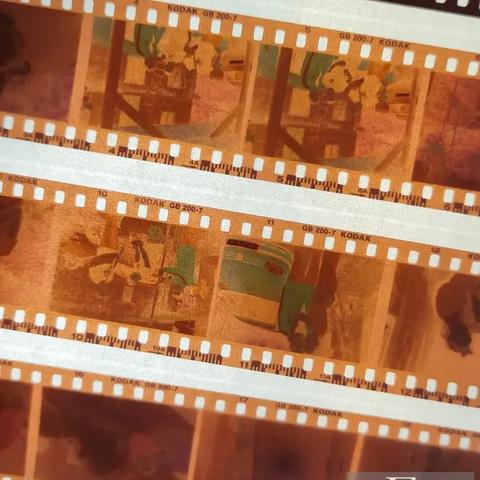
KONO! DONAU II is a colour negative film in 135 format, 36 exposures, rated ISO 8. That is not a typo: eight, roughly fifty times slower than an ordinary street film. Handmade in Germany, processed in standard C-41. A printed manual comes with every roll.
How the picture looks
Ultra-low speed brings ultra-fine grain — the image comes out smooth, almost without structure. On top of that it has a palette of its own: DONAU II pushes colour into pronounced blues and violets. Water, sky, dusk and night light settle into that palette as though the film had been made for them.
What to shoot on it
Everything long daylight exposures exist for: flowing water turning to mist, crowds smeared across a square, cloud trails, an empty city with the passers-by gone. Normally this calls for a heavy ND filter — here the film itself does that job. Evening and night open a second field: genuinely long exposures measured in minutes.
How to shoot it
Check one thing before buying: whether your camera or meter goes down to ISO 8. Many scales start at 25 or 50, in which case you will need a handheld meter or a phone app. A tripod is almost always required, though the maker notes that in good conditions all of their sample pictures were taken handheld. The film is experimental and results may vary — they say so themselves. For sustainability, KONO! loads it into used and cleaned cartridges.
Processing and scanning
Ordinary C-41 at any lab. Do mention at the counter that the film is unusually slow — it changes nothing about development, but at the scanning stage the operator should know that the blue and violet cast is built into the film rather than a mistake.
How it compares
There is almost nothing to compare it with: the only films this slow are specialist document and technical emulsions, and all of them are black and white. In colour, ISO 8 is effectively DONAU alone. The alternative is ordinary ISO 100 plus an 8–10 stop ND filter — more expensive, heavier, and without that particular blue.