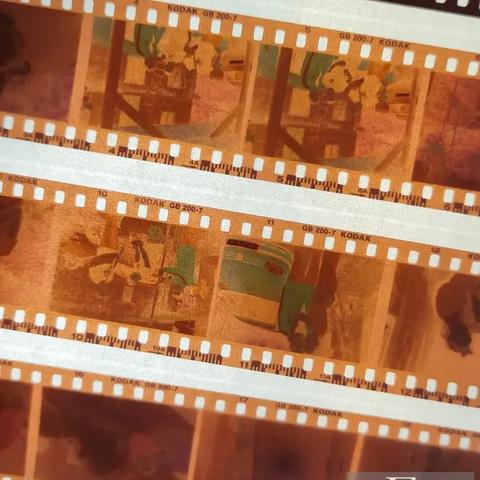
KONO! Original Galaxy is a colour negative film in 135 format, 36 exposures, ISO 200, C-41 process. It is hand-tinted stock: the German workshop KONO! runs finished emulsion through a device of their own making — they call it The Reanimator — and puts colour into it that the factory never coated.
How the picture looks
Galaxy is about excess colour. The formula has been reworked so the hues fairly burst out: saturated, ringing, pushed toward magentas and blue-greens that ordinary film simply does not produce. The name is not accidental — the picture looks as if it were taken through someone else's atmosphere, where light is put together differently.
What to shoot on it
Anything already bright: neon, graffiti, a market, a carnival, a shop window at night, a garden in bloom. The film makes no pretence of neutrality, so pick subjects that suit an excess of colour. Portraits come out bold — though not every sitter will thank you.
How to shoot it
Shoot it as an ordinary ISO 200 film: meter at box speed, no compensation. The tint lives inside the emulsion, so the effect does not depend on how you expose — but the more large, even, light surfaces in the frame (sky, a wall, snow, fog), the more visible the shift. Tinted film rewards simple subjects.
Processing and scanning
Standard C-41, nothing special required: KONO! states plainly that any minilab can process their films. The scan is worth discussing in advance, though — automatic white balance in a lab scanner will earnestly try to "fix" the colour and remove exactly the effect you paid for. Ask for no auto-correction, or neutral settings.
How it compares
Its nearest neighbours are Revolog and dubblefilm — the same hand-treated films, except Revolog's effects tend to be geometric (stripes, dots, flares) while KONO!'s is a continuous colour shift across the whole frame. What sets it apart from ordinary colour film is that the outcome is not fully predictable: that is the point, not a defect.