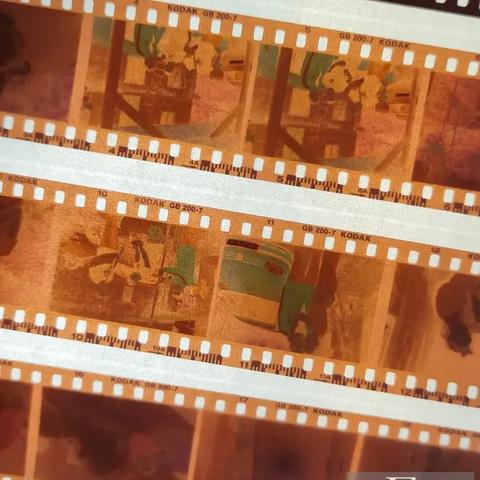
KONO! Original Monsoon is a colour negative film in 135 format, 36 exposures, ISO 200, C-41 process. It is hand-tinted stock: the German workshop KONO! runs finished emulsion through a device of their own making — they call it The Reanimator — and puts colour into it that the factory never coated.
How the picture looks
Monsoon gives deep, dense colour inspired by the freshness of the air after tropical rain. It is not brightness but saturation: greens go darker and richer, blues gain depth, and the whole frame takes on a damp, cool clarity, as if the shot were taken the moment the rain stopped and everything is still shining.
What to shoot on it
Foliage, water, woodland, a park after rain, a seaside town, the tropics — anything that should look wet and alive. It works well under cloud, where ordinary film turns limp and grey: Monsoon adds precisely the density that light is missing.
How to shoot it
Shoot it as an ordinary ISO 200 film: meter at box speed, no compensation. The tint lives inside the emulsion, so the effect does not depend on how you expose — but the more large, even, light surfaces in the frame (sky, a wall, snow, fog), the more visible the shift. Tinted film rewards simple subjects.
Processing and scanning
Standard C-41, nothing special required: KONO! states plainly that any minilab can process their films. The scan is worth discussing in advance, though — automatic white balance in a lab scanner will earnestly try to "fix" the colour and remove exactly the effect you paid for. Ask for no auto-correction, or neutral settings.
How it compares
Its nearest neighbours are Revolog and dubblefilm — the same hand-treated films, except Revolog's effects tend to be geometric (stripes, dots, flares) while KONO!'s is a continuous colour shift across the whole frame. What sets it apart from ordinary colour film is that the outcome is not fully predictable: that is the point, not a defect.