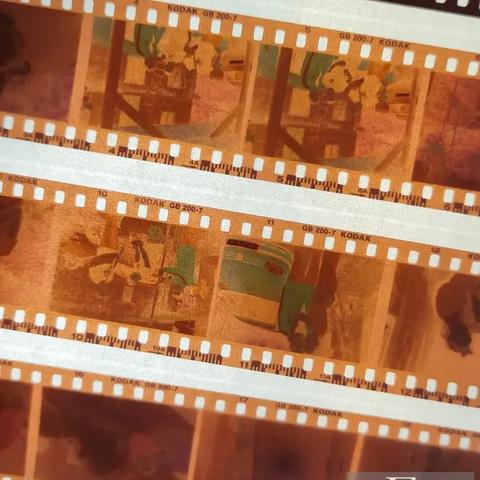
Rollei Retro 80S is a black and white negative film, a 120 roll of 12 frames, ISO 80, standard black and white processing. It is not an ordinary camera film: underneath is Agfa-Gevaert's Aviphot Pan 80 aerial emulsion, coated on a PET base with a special layer that helps it transport evenly through a camera. Superpanchromatic sensitisation makes it usable in daylight and under tungsten light alike — and opens the door to infrared work.
How the picture looks
The family's defining trait is a very pronounced S-shaped characteristic curve. Shot at its nominal ISO 80, the film gives an emphatically contrasty picture: shadows fall away with little detail while the mid-tones stand clearly apart from one another. That is not a flaw but the reason the aerial emulsion exists — cutting through haze from altitude demands contrast. On the print it reads as graphic: blacks black, whites white, mid-tones separated. For the ISO 80 version the maker specifically claims high resolution and very fine grain.
Exposure
If that hardness is not what you want, the maker gives a concrete recipe: give it two stops more light — shoot it at EI 20 — and shorten development to match. It is the classic expose-for-the-shadows, develop-for-the-highlights move: the extra exposure recovers shadow detail, the shorter development keeps the highlights from blowing. In practice, treat it as two different films in one cassette — the graphic nominal one and the softened one.
Shooting infrared
The superpanchromatic sensitisation makes infrared photography possible, with one caveat the maker states plainly: the effect appears only behind a filter that blocks visible light to roughly 715 nm — a Heliopan RG 715 or equivalent. An ordinary red filter will not do it. With the right filter you get the classic infrared look: a near-black sky, foliage lit up as if snow-covered, water without highlights. Mind the filter factor — it costs several stops, so bring a tripod and patience, and focus before the filter goes on the lens.
What to shoot on it
Landscape, architecture, industrial subjects, mist and haze — anything where you want graphic separation rather than a gentle tonal ramp. ISO 80 means a sunny day, a wide aperture or a tripod; handheld under cloud will be a struggle. For an even portrait with soft transitions, though, reach for something calmer.
Processing
It develops in ordinary black and white developers to the times in Rollei's datasheet. The important decision is made at the camera, not in the darkroom: expose it nominally and develop as published; give it extra light for the shadows and you must cut the time, or the highlights go white. A dilute developer and gentle agitation pull in the same direction, softening the curve. This is a film worth keeping notes on — one or two tests give you your own EI-and-time pairing, after which it stops being temperamental.
How it compares
The maker warns you honestly: if you want optimal shadow detail, maximum speed and an even grey scale, buy the classics — Ilford Pan F+, ADOX CHS 100 II, Ilford Delta 100, Kodak T-Max 100, Fujifilm Neopan Acros II. This film is about something else: graphic separation, that particular aerial-survey look, and infrared capability none of those has.