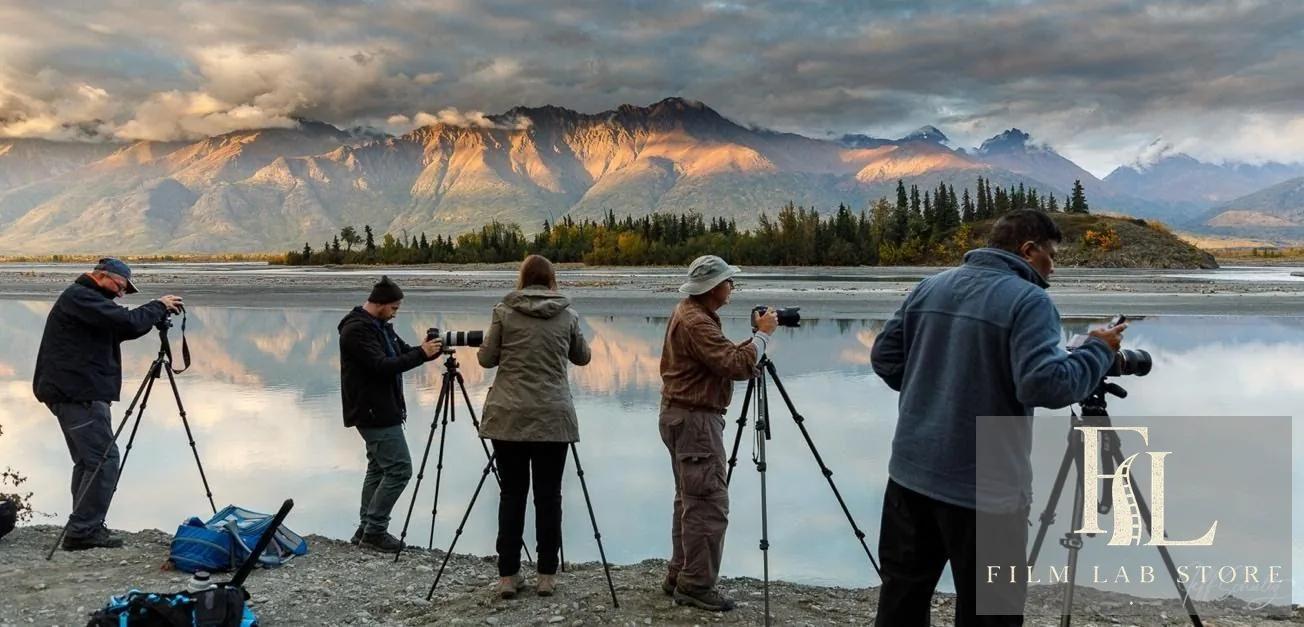
Introduction: The Tripod as a Tool for Expanding Creative Boundaries
In the modern era of rapid digital sensor advancement, featuring ultra-high ISO performance and sophisticated In-Body Image Stabilization (IBIS) systems, the role of the tripod is frequently questioned. However, technical analysis of image formation processes proves that no electronic or optical system can completely eliminate the need for a physical three-point support when executing complex visual tasks. For a professional photographer, a tripod is not merely a camera stand, but a primary tool that allows one to push past the constraints of human physiology and sensor dynamic range.
Using a tripod is fundamental to a whole spectrum of creative techniques. Long-exposure photography—encompassing landscape shooting with blurred water or clouds, astrophotography, and architectural shooting at twilight—requires absolute camera immobility for seconds or even minutes. In such scenarios, even microscopic vibrations caused by wind or shutter mechanisms can degrade sharpness at the pixel level, which is especially critical for sensors exceeding 45 megapixels.
Beyond stabilization, a tripod ensures the geometric precision necessary for panoramic photography and multi-exposure. To create panoramas without stitching errors (parallax), the camera must rotate around the nodal point of the lens, which is technically impossible when shooting handheld. In macro photography, where depth of field is measured in fractions of a millimeter, a tripod combined with focusing rails allows for focus stacking, ensuring perfect frame alignment for subsequent digital processing. Thus, the support system becomes the foundation upon which modern, high-quality visual production is built.
Materials Science: Analyzing Structural Rigidity and Damping
The choice of tripod material determines not only its mass but also its physical capacity to absorb vibration energy and withstand loads under extreme conditions. Two materials dominate the professional equipment market: aluminum alloys and carbon fiber.
Physico-Chemical Properties of Aluminum Alloys
Aluminum tripods are traditionally manufactured from high-strength aircraft-grade alloys. Their primary characteristics are predictable mechanical behavior and high inertial mass. In controlled studio environments or when shooting from a vehicle, the heavier weight of aluminum is an advantage, as it lowers the entire system's center of gravity, increasing resistance to accidental bumps or cable tugs.
However, aluminum has significant drawbacks. According to materials science data, Young's modulus for aluminum is approximately 69 GPa, indicating significantly lower rigidity compared to high-quality carbon fiber. Aluminum is an excellent conductor of vibrations; energy from a mirror slap or wind travels through the metal with minimal damping. Studies show that an aluminum structure can vibrate for up to 5.3 seconds after an external disturbance, negatively affecting burst shooting on long exposures. Furthermore, the high thermal conductivity of aluminum makes its use extremely uncomfortable in sub-zero temperatures, as the metal rapidly draws heat away from the operator's hands.
Carbon Fiber: Resonance and Rigidity
Carbon fiber is a composite material in which carbon filaments are interwoven and bound by a polymer resin. Its advantage lies in an exceptionally high stiffness-to-weight ratio. The Young's modulus of professional-grade carbon fiber can reach 181 GPa, providing significantly greater stability at the same tube thickness compared to aluminum.
The key property of carbon fiber is its natural vibration damping. The composite structure of the material acts as a low-frequency filter, absorbing micro-oscillations almost instantaneously. In comparative tests, a carbon fiber tripod stabilizes in just 1.0 second after a physical impact. For landscape photographers and those working outdoors, carbon fiber is the top choice due to its corrosion resistance (e.g., in salty seawater) and low thermal conductivity, allowing for work in freezing temperatures without the risk of thermal injury to the skin.
| Parameter | Aluminum Alloy | Carbon Fiber |
|---|---|---|
| Density | High (heavy) | Low (light) |
| Young's Modulus (Rigidity) | ~69 GPa | Up to 181 GPa |
| Vibration Damping | Low (~5.3 s) | High (~1.0 s) |
| Thermal Conductivity | High (cold to the touch) | Low (comfortable in the cold) |
| Corrosion Resistance | Prone to oxidation | Full resistance |
| Impact Response | Plastic deformation (dents) | Brittle fracture (cracks) |
Comparative characteristics of support system materials.
Leg Construction and Locking Mechanisms
Tripod stability depends not only on the material but also on the geometric parameters of the sections and the reliability of their connections. Every additional leg section is a potential point for micro-play and a reduction in the system's overall rigidity.
Sections and Diameters: The Mathematics of Stability
For professional use, 3-section tripods are considered the most stable. This is because the diameter of the lowest section remains large enough to resist bending. 4- and 5-section models are designed for maximum portability and ease of transport in airline luggage, but their stability when fully extended is significantly lower due to the very thin tubes used at the bottom.
A critical indicator is the wall thickness and the overall diameter of the top section. Professional systems typically start at a diameter of 28 mm and above. The wider the leg base, the more effectively it distributes the torque generated by heavy camera setups.
Twist-locks vs. Flip-locks
The section locking mechanism determines operational speed and equipment reliability in harsh environments.
- Twist-locks: Operate by rotating a collar that compresses an internal collet around the tube.
- Advantages: Sleek, streamlined shape that minimizes the risk of snagging on branches or rocks; ability to unlock all sections on a single leg with a single twist of the hand; higher resistance to dust and mud ingress due to tight internal seals.
- Disadvantages: Require periodic cleaning when working in sand, as fine particles can damage the threads.
- Flip-locks: Utilize an eccentric lever mechanism for fixation.
- Advantages: Visual and tactile verification—the photographer can clearly see whether the lock is closed; ease of use when wearing thick gloves.
- Disadvantages: Greater weight and bulk; risk of accidental opening if snagged; necessity of regular screw tightening with a hex key to prevent legs from slipping under the camera's weight.
Typology and Mechanics of Tripod Heads
The tripod head is the core node that ensures precise positioning and retention of the compositional frame. Head selection should be based on the specific requirements of the shooting process.
Ball Heads: Speed and Versatility
The ball head is the most popular solution due to its ability to quickly adjust the camera's position in all planes simultaneously. Professional models are equipped with separate knobs for tension control (friction) and a dedicated panoramic panning base. The main issue with ball heads is "drift" or "creep" after locking, especially when paired with heavy telephoto lenses. Using large-diameter balls (over 40 mm) minimizes this effect due to the larger contact surface area and a higher coefficient of friction.
3-Way and Geared Heads: Precision Accuracy
For architectural and interior photography, where keeping the horizon line and vertical lines parallel is critical, 3-way heads are used. They allow each axis to be adjusted independently. Geared heads represent the pinnacle of this design's evolution. Instead of free movement, they use a gear drive system, allowing for microscopic frame corrections without unlocking the mechanisms. This completely eliminates the sagging and creeping issues typical of ball heads.
Gimbal Heads: The Dynamics of Heavy Glass
Wildlife photographers and sports reporters use gimbal heads when working with lenses ranging from 400 mm to 800 mm. A gimbal balances the system's center of gravity so that heavy gear literally "floats" in the air. A properly configured gimbal allows you to release the camera in any position without it flopping over, remaining perfectly pointed at the subject.
Load Calculation and Dynamic Stability
Understanding the stated load capacity requires a critical approach. The figure provided by manufacturers often reflects the static breaking point rather than operational comfort.
The "3x" Rule and Torque
To achieve maximum sharpness, it is recommended to adhere to the rule that the tripod and head should have a load capacity three times the weight of the camera with its heaviest lens and accessories. Mathematically, this is justified by the need to counteract the torque ($M$) generated when tilting the camera:
$$M = F \cdot d \cdot \sin(\theta)$$
where $F$ is the weight of the camera, $d$ is the distance from the center of gravity to the axis of rotation, and $\theta$ is the angle of tilt. A long telephoto lens acts as a lever, increasing the arm length $d$, which demands much greater rigidity from the head's locking mechanisms.
Wind Energy and Critical Tipping Speed
When shooting outdoors, a tripod acts like a sail. Modeling shows that for lightweight mirrorless systems, the critical wind speed at which a tripod might tip over is around 15.2 m/s (55 km/h). Using heavier tripods or ballast raises this threshold but also changes the structural resonance frequency.
The Arca-Swiss Ecosystem and the Role of L-Brackets
Standardization of mounts is critical for workflow efficiency. The Arca-Swiss system has become the gold standard of professional photography due to its reliability and ability to withstand high shear loads.
Advantages of Using an L-Bracket
An L-bracket (L-plate) is a custom-fit plate that wraps around the bottom and side of the camera body. It allows the photographer to switch between horizontal (landscape) and vertical (portrait) orientation without changing the position of the tripod head. This is crucial for stability:
- Maintaining the Center of Gravity: The camera remains directly above the tripod's central axis. When using standard plates for portrait orientation, the camera must be flipped over to the side, shifting the weight and making the system vulnerable to vibrations and tipping.
- Preserving Composition: The optical axis of the lens remains virtually unchanged, which significantly speeds up framing.
- Preventing Slippage: L-brackets often feature anti-twist lips or ridges that prevent the camera from spinning on its 1/4" screw under the weight of heavy lenses.
The Central Column Dilemma: Rigidity Analysis
The center column is the element most frequently misused. While it offers the convenience of quick height adjustment, extending it critically compromises the rigidity of the entire structure.
Loss of Rigidity Upon Extension
Studies demonstrate that when the center column is fully raised, a tripod loses up to 56% of its pitch rigidity and up to 40% of its yaw rigidity. Effectively, an extended column transforms a tripod into a tall monopod mounted on a three-legged base. Even when fully collapsed, the presence of a column mechanism creates an additional friction joint, reducing overall system rigidity by 15% compared to "systematic" tripods that lack a center column entirely.
Recommendations for Use
The center column should only be used as a last resort when the height of the legs is insufficient to compose the frame. For macro photography or low-angle shooting, tripods with reversible columns exist, allowing the camera to be suspended upside down between the tripod legs. In the professional landscape community, models completely lacking a center column are becoming increasingly popular because they have a smaller collapsed diameter and allow the camera to be lowered almost flat to the ground.
Field Stabilization Strategies in Extreme Conditions
Working "in the field" requires adaptability and an understanding of environmental physics.
Setup on Uneven Surfaces
Proper setup begins with ground analysis. On soft surfaces (sand, snow, mud), metal spikes or specialized snowshoes must be used. When working on a slope, one tripod leg should always point toward the subject (or against the wind). This creates a reliable brace and prevents the entire system from tipping backward onto the photographer. If the surface is slippery (wet rocks, ice), reversible rubber feet will provide better grip due to a larger contact surface area.
Managing Wind and Ballast
To increase inertial mass, photographers frequently hang a camera bag or backpack from the hook at the bottom of the center column. However, a critical mistake is often made here: if the bag swings freely, it acts as a pendulum, generating its own low-frequency vibrations.
- The Professional Solution: Lower the bag so that it touches the ground, but keep the strap taut. This creates a damping effect without the swinging.
- Alternative: Using sandbags or rocks placed directly on the tripod legs, which is significantly more effective at lowering the center of gravity without negative side effects.
Equipment Maintenance and Longevity
A tripod is an investment that, with proper care, can last for decades, outliving several generations of cameras.
Cleaning After Saltwater and Sand
Salty seawater is the worst enemy of metal components and carbon fiber joints. After shooting on the coast, the tripod should be completely disassembled, each section rinsed with fresh water, and dried thoroughly. Leftover salt crystallizes inside the locks, turning into an abrasive that quickly destroys threads and shims.
Lubrication and Inspection
Twist-locks require periodic lubrication. It is vital to use exclusively dry Teflon-based (PTFE) lubricants, which do not attract dust and sand. Using traditional oils or WD-40 will turn the internal mechanisms into a grinding paste that wears down metal and carbon fiber. A regular "Tug Test"—pressing down with full body weight on a locked tripod—allows you to spot worn internal shims early and prevent a catastrophic gear drop.
5. Practical Tips and Pro Tricks
Setup and Stability
Uneven Surface: Adjust each leg individually so the center column remains vertical. On a slope, point one leg forward (under the lens) — this creates a reliable anchor point.
Center Column: Think of it as your "emergency exit." Use it only when leg extension isn't enough. Remember: a raised column turns a stable tripod into a monopod standing on three legs, reducing rigidity by 40–50%.
Ballasting in Wind: A backpack hung from the hook makes your tripod "solid as concrete." Important nuance: if the bag swings in the wind, it acts as a pendulum and creates vibrations. Lower it so it just touches the ground while the strap stays taut.
Useful Add-ons
L-bracket and Arca-Swiss: Switching to the Arca-Swiss system is the industry standard. An L-bracket lets you instantly flip the camera to portrait orientation while keeping the center of gravity directly above the tripod axis — not tipping it sideways.
Converting to a Monopod: Many modern tripods let you unscrew one leg and attach it to the center column, turning the rig into a monopod. A must-have for locations where tripods are prohibited or space is tight.
Cork vs Rubber: When choosing quick-release plates, prefer cork or quality rubber coatings. They grip the camera body more firmly, preventing rotation under the weight of heavy glass.
"The Plate Rule": This is the accessory everyone loses. Never leave it on the table. When you remove the camera — either keep the plate on it, or clip it straight back onto the head. Finding a replacement mid-shoot is a mission impossible.
Conclusion: The Philosophy of Conscious Choice
The art of stability is not about buying the most expensive gear, but about understanding the physical limitations and capabilities of your support system. A high-quality tripod is the foundation that enables the execution of the boldest creative visions, from night city panoramas to macro worlds hidden from the human eye.
When choosing a tripod, a professional looks at the long term. A camera will become obsolete in five years, lenses in ten, but a properly selected carbon fiber tripod with a reliable head will remain an unwavering tool throughout an entire career. By investing in stability, a photographer invests in the technical perfection of every single frame, securing that very "concrete" base upon which true visual art is built.