Kodak Is Taking Film Back Under Its Own Control: What This Means for Photographers
Eastman Kodak is gradually regaining direct control over the distribution of photographic film. This is significant news for the entire analog photography market: after many years during which Kodak Alaris handled the sale and promotion of Kodak photographic films, the Rochester-based manufacturer is once again bringing its films to market directly.
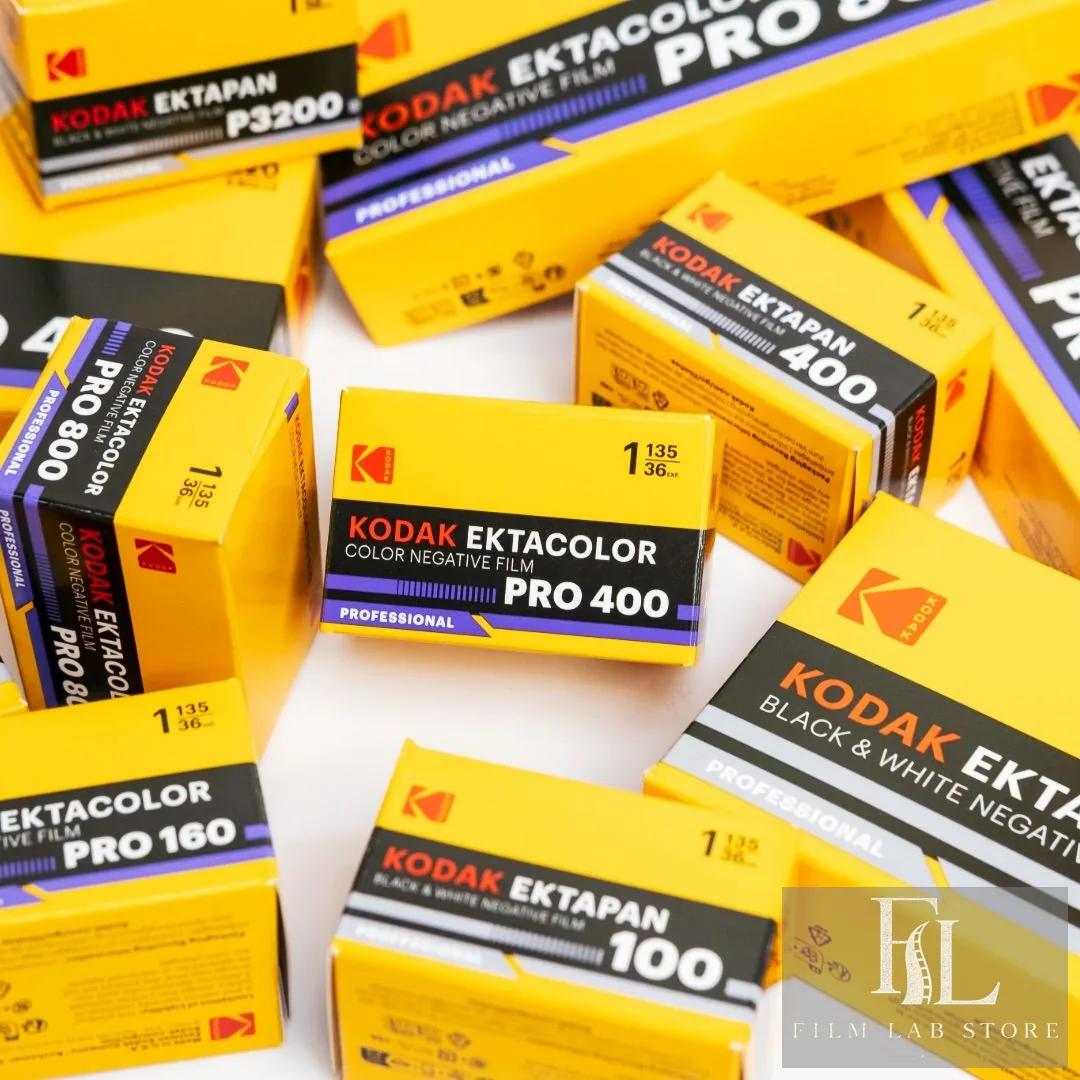
On March 2026, Eastman Kodak has brought the distribution of its photographic films back in-house. Along with this, the films have received new packaging, and some products have been renamed due to trademark and brand rights issues.
What Exactly Happened
After Kodak’s bankruptcy in 2012, the company went through a major restructuring. Eastman Kodak continued to manufacture photographic film, but the distribution and marketing of many Kodak films were handled by a separate company — Kodak Alaris. For most buyers, this was almost invisible: the familiar Kodak name still appeared on the boxes.
The situation began to change in autumn 2025, when Eastman Kodak started bringing individual films back into its own sales system. First came Kodacolor 100 and Kodacolor 200, and later other popular emulsions were gradually added to the new lineup. PetaPixel reported that Kodak Tri-X 400 and Kodak Ektar 100 also moved to Kodak’s direct distribution model and became available in 135 and 120 formats.
In effect, Kodak is rebuilding its own film lineup — with new boxes, an updated naming structure, and a more direct path from manufacturer to retailers.
New Names: What Happens to Portra and T-Max
One of the most noticeable changes concerns product names. Some historic brands, including Portra and T-Max, are connected to Kodak Alaris rights. Because of this, some films in Eastman Kodak’s new lineup have received different names.
Kosmo Foto notes that in the new system, T-Max is being replaced by the Ektapan line, while Portra is being replaced by Ektacolor Pro. This does not necessarily mean that photographers’ favorite emulsions have physically disappeared, but it does mean a change in branding and market positioning.
At the same time, retailers and industry commentators are urging photographers not to panic. Analogue Wonderland explains separately that Kodak Alaris has not “disappeared,” and that Eastman Kodak and Kodak Alaris have historically played different roles: Eastman Kodak manufactures film in Rochester, while Kodak Alaris handled the sales and marketing of many photographic films.
Kodak Expands the Lineup: 35 mm, 120, Sheet Film, and Bulk Rolls
The return of distribution is not limited to standard 135 and 120 formats. Digital Camera World reported on May 6, 2026, that Kodak has added large-format sheet films and 100-foot bulk rolls to its own lineup. These include Ektapan 100, Ektapan 400, Tri-X 320, Ektacolor Pro 160, and Ektacolor Pro 400 in various formats, including 4×5 and 8×10 inches.
This is an important signal: Kodak is not merely reissuing familiar films in new boxes. It is trying to build a broader and more coherent product system for different types of photographers — from those shooting standard 35 mm cameras to fans of medium and large format.
What This Could Mean for Photographers
For photographers, the main question is simple: will film become more available, cheaper, and more stable in supply?
There is no final answer yet. Direct distribution could, in theory, reduce the number of intermediaries and make supply more predictable. PetaPixel noted that the new “direct-from-Kodak” films had already appeared for sale in updated retro-style packaging and often at a slightly lower price than before.
However, it is not worth expecting film prices to drop instantly across the board. Prices are affected by production costs, logistics, demand, local distributors, taxes, exchange rates, and the overall economic situation. For Ukrainian buyers, the final price will also depend on import costs, shipping, and availability from specific retailers.
Why This Matters for Analog Photography
In recent years, film photography has seen steady interest. New photographers are discovering 35 mm cameras, medium format, slide film, black-and-white manual development, and experimental processes. Against this background, Kodak’s actions look like an attempt to work with the photographic film market in a more systematic way again.
Kodak’s official website already has a separate Still Film section, divided into consumer and professional film. This also shows that the company is not hiding photographic film as a secondary product, but is once again presenting it as a separate direction.
However, there are also limiting factors. In 2025, the Associated Press reported that Eastman Kodak had financial obligations and had warned about risks related to its debt load, although the company itself stated that it expected to meet those obligations.
So the situation should be viewed realistically: Kodak’s return to direct distribution is a positive signal for the market, but it is not a guarantee that film will suddenly become cheap or always available.
What Happens Next
In the near future, several things are likely.
First, Kodak films in new packaging will gradually appear on store shelves. Some names will remain familiar, while others may change.
Second, photographers will need to pay closer attention not only to the name, but also to the film type, ISO, development process, and format. This is especially important for new names such as Ektacolor Pro and Ektapan.
Third, the market may become more stable if Kodak is truly able to build a more efficient supply chain. But the real effect will not be visible in press releases — it will be visible on store shelves: in availability, prices, and regularity of supply.
Conclusion
Eastman Kodak’s return to direct distribution of photographic film is one of the most important events in analog photography in recent years. This is not just a change of packaging or product names. It is an attempt by the manufacturer to directly control its own film ecosystem again.
For photographers, this could mean a wider choice, a clearer product lineup, potentially better availability, and possibly more stable prices. But for now, the main thing is to watch actual supply and not panic over the name changes. Kodak film is not disappearing. On the contrary, Kodak is clearly trying to make film a visible part of its future again.