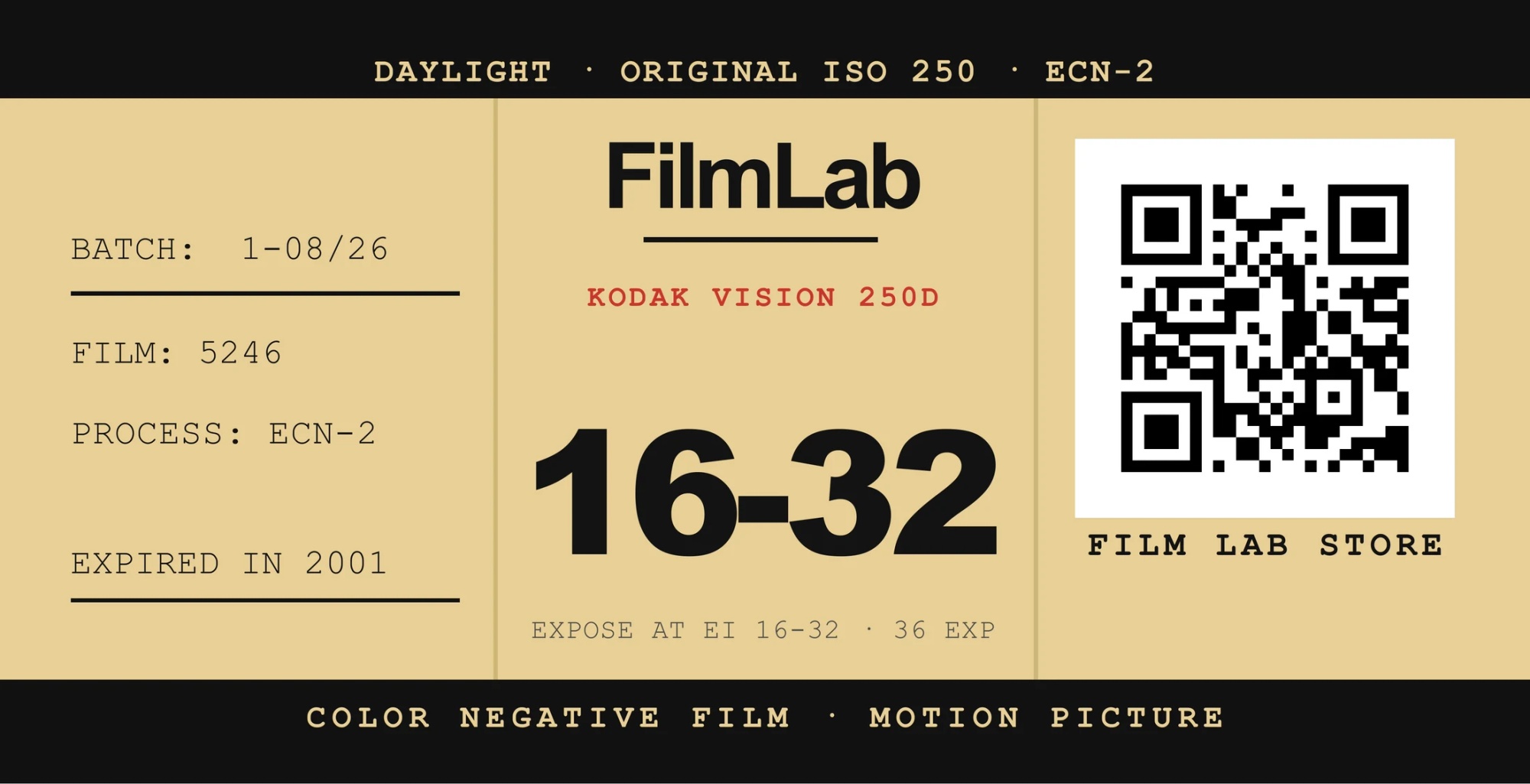
Sometimes an old film is more than photographic material: it is a surviving fragment of cinema history. FilmLab Kodak Vision 16–32 is made from original Kodak VISION 250D Color Negative Film 5246, a professional 35 mm stock from the first VISION generation.
This is not VISION3 in vintage packaging and not a modern emulsion styled to look like the 1990s. It is original Kodak VISION 250D 5246, with the source material marked as expired in 2001.
Before VISION3 came the original VISION
Kodak launched the VISION family in the 1990s after EASTMAN EXR. VISION 320T and 500T appeared in 1996, followed in 1997 by VISION 250D 5246/7246: 5246 was the 35 mm version and 7246 the 16 mm version.
The generations should not be confused. VISION2 arrived in 2002 and VISION3 in 2007. Kodak discontinued VISION 250D 5246 in 2005, making it a vanished original emulsion from a distinct period of Kodak history.
What fresh Kodak VISION 250D 5246 was like
5246 was a medium-speed colour negative designed for daylight and mixed light. Its factory exposure index was EI 250 at 5500 K, with ECN-2 as the standard process.
Kodak H-1-5246 describes very low measured granularity, sharpness, rich black shadows, clean highlights and natural flesh-to-neutral reproduction. The stock uses an acetate safety base with rem-jet backing.
A film stock used in major motion pictures
Kodak VISION 250D 5246 was a working professional stock, not an obscure technical material. Cinematographers selected it for daylight sequences and demanding natural-light conditions in major productions.
A Simple Plan — 1998
Cinematographer Alar Kivilo selected 5246 for every daylight scene in Sam Raimi’s film. He needed enough speed to make the most of short winter days while preserving the stark, graphic quality of snowy exteriors.
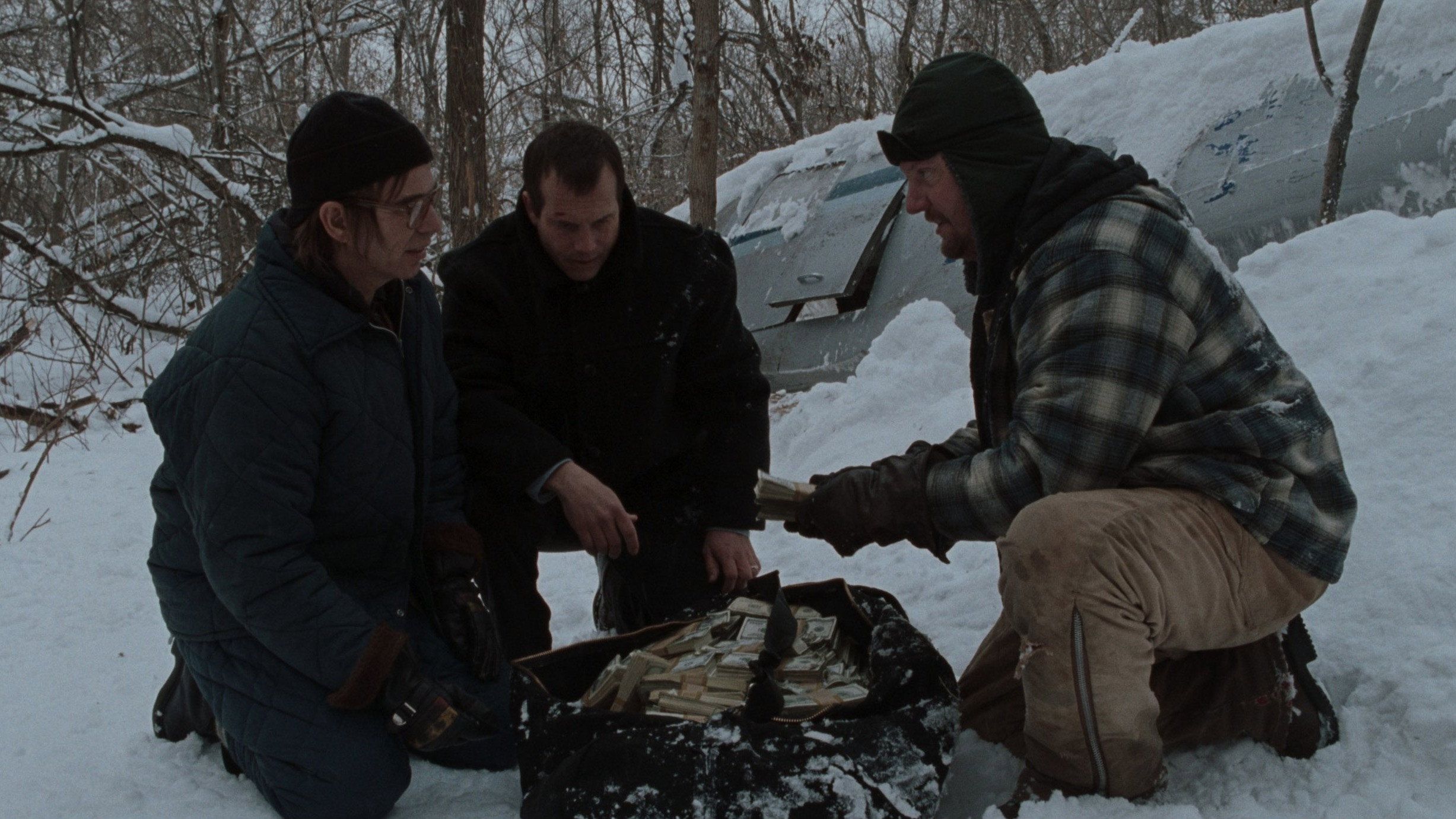
Source: American Cinematographer — A Simple Plan: The Root of Evil
Frida — 2002
Rodrigo Prieto used 5246 for daylight exteriors. He noted that it could be shot without an 85 filter, retained good contrast and allowed work to continue as natural light levels fell.

Source: American Cinematographer — Frida
21 Grams — 2003
Prieto changed stocks with the characters’ emotional trajectories. VISION 250D 5246 was used for Paul’s story after his transplant and for most of his scenes with Cristina.

Source: American Cinematographer — 21 Grams
Batman Begins — 2005
Wally Pfister selected 5246 for the daylight portion of Batman Begins, about 15% of the film, and rated it normally at EI 250. The main night stock was different, so 5246 should be associated specifically with the daylight work.

Source: American Cinematographer — Batman Begins
FilmLab Kodak Vision 16–32
I hand-load original Kodak VISION 250D 5246 into standard Type 135 cassettes with 36 exposures, making it usable in an ordinary 35 mm still camera.
Fresh 5246 carried a factory rating of EI 250. This batch expired in 2001, so I recommend starting at EI 16–32. Its age is not a hidden flaw but an essential part of the material’s character.
How to expose this batch
- shoot in bright daylight;
- bracket the first cassette at EI 16, 25 and 32;
- do not use the first cassette for irreplaceable photographs;
- tell the lab that the film has rem-jet backing;
- judge the result from a good scan, not only by looking at the negative.
Age may cause base fog, colour-balance shifts, lower contrast, stronger grain and variation between cassettes. EI 16–32 is a recommendation for this vintage batch, not the factory speed of 5246.
Why ECN-2 processing matters
5246 is a motion-picture negative with rem-jet backing. Kodak recommends controlled ECN-2 processing for its colour negative motion-picture films. Ordinary C-41 is not the standard process and should only be used as a pre-arranged experiment.
Who FilmLab Kodak Vision 16–32 is for
This film is for photographers interested in rare emulsions, the physical history of materials and controlled experimentation. If every roll must match the consistency of fresh modern still film, choose a different stock.
FilmLab Kodak Vision 16–32 offers the chance to make a photograph on original Kodak VISION 250D 5246, an emulsion that is no longer manufactured.
Buy Kodak VISION 250D 5246
View FilmLab Kodak Vision 16–32 — Kodak VISION 250D 5246, 135/36
Frequently asked questions
Is this VISION3 250D?
No. This is first-generation Kodak VISION, code 5246. Modern VISION3 250D uses code 5207.
Why EI 16–32 if the film was rated EI 250?
EI 250 is the factory rating of fresh stock. This material expired in 2001, so this batch needs substantially more exposure.
How should 5246 be processed?
The standard process is ECN-2 with correct rem-jet removal. Always tell the lab what film you are sending.