Ilford
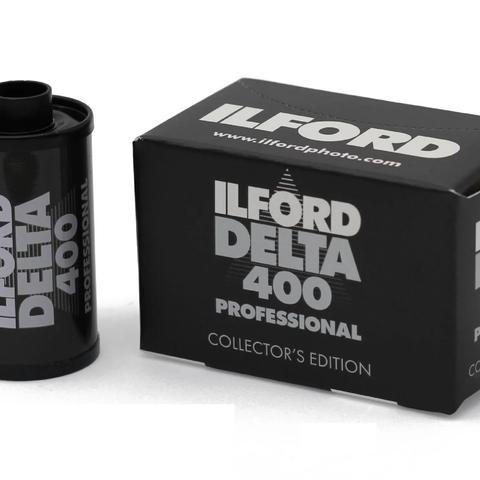
Ilford Delta 400 Professional Collector's Edition 135/36
€24.08
Film Lab Store
How far it goes
The photo is for illustration only — the actual product looks different.
An ammonium thiosulphate fixer: minutes where a sodium fixer needs twenty. One solution for both film and paper.
Ammonium thiosulphate dissolves undeveloped silver halides far more readily than the sodium salt. Film clears in two to five minutes instead of ten to twenty, which is less time for the emulsion to swell and take damage. For modern high-iodide films a rapid fixer is effectively obligatory.
The yield in the name is a guide for a fresh solution. The reliable check is a drop of fixer on a scrap of unexposed film: if it does not go clear in half a minute, the solution is finished. Fix for twice the clearing time.
The 1+4 concentrate is more compact and cheaper per litre; the ready solution is easier if you fix rarely and would rather not measure. Chemically they are the same thing.
Is one fixer for both film and paper all right?
Yes, it is the same formula. But keep separate batches: paper fixer accumulates dyes, and paper sheds particles that later settle on film.