Briefly
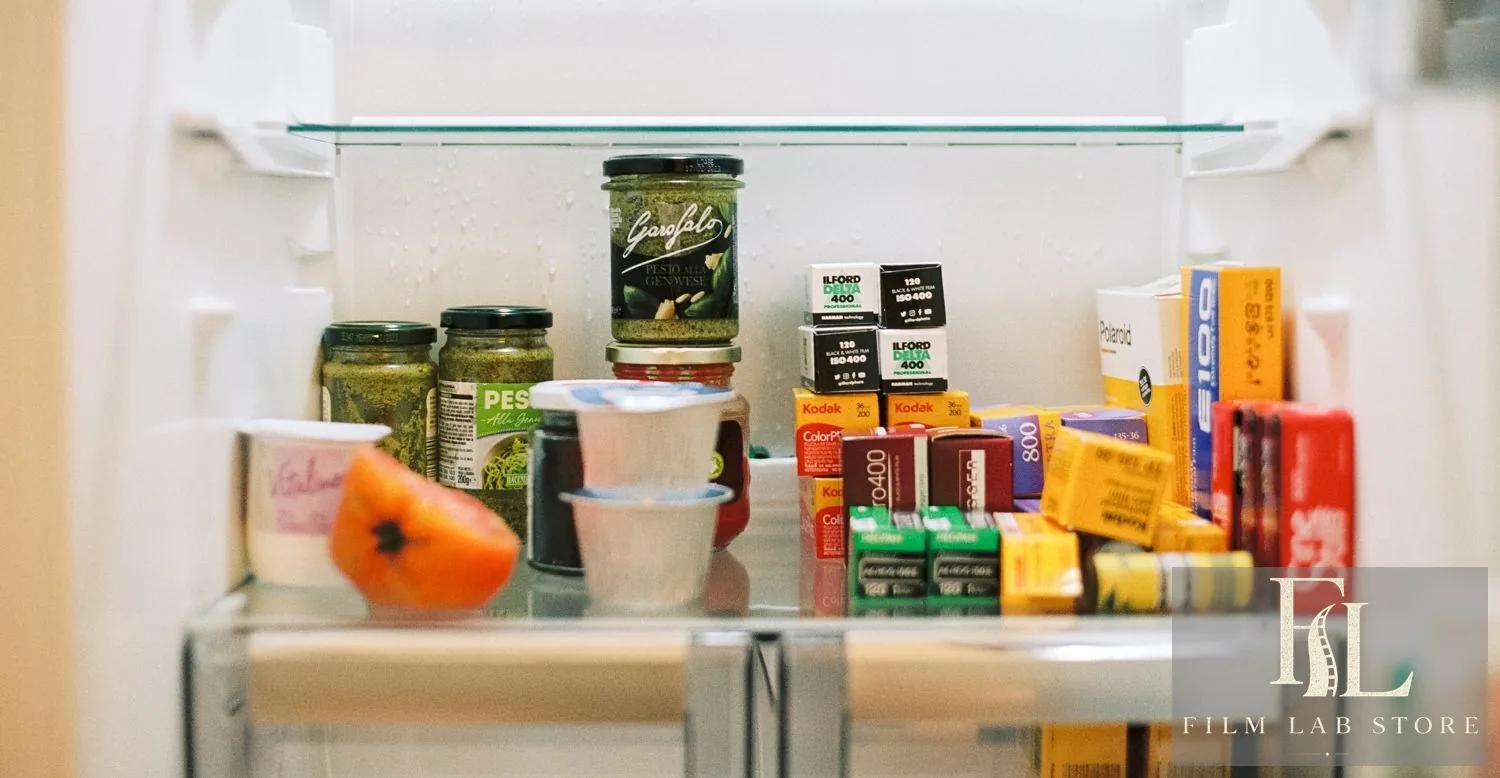
- The main enemy of film is heat and humidity. A refrigerator or freezer will extend its life many times over.
- Store in an airtight container with silica gel - before developing and after purchase.
- Allow the film to warm up in a closed container for 30-60 minutes before shooting.
- Label each roll: type, ISO, date of deposit.
- Expired film can last for years if stored properly - heat accelerates degradation more than age.
How to store photographic film at home: a complete guide
Photographic film is a sensitive material. It reacts to heat, humidity, light and radiation. Proper storage doesn't just extend shelf life - it determines whether you get sharp, contrasty images or a hazy veil of color shifts. This article will help you understand where and how to store your film at home so you don't lose a single frame.
What happens to the film if it is stored poorly
The film emulsion is a living material. It degrades over time and under unfavorable conditions:
- loses light sensitivity (real ISO falls below the rated value)
- gives more grain and base veil
- color film exhibits color shifts to yellow, green, or magenta
- contrast decreases, shadows become cloudy
- in extreme cases emulsion layers stick together or separate from the substrate
Expired film loses quality faster precisely because of poor storage - heat and humidity accelerate degradation several times faster than age per se. Two identical films with the same expiration date can give completely different results depending on how they were stored.
The lower the storage temperature, the slower the chemical aging processes. Even a decrease of a few degrees significantly prolongs the stability of the emulsion. The refrigerator is the best friend of the photographer who wants to keep film in stock.
Optimal storage conditions
Temperature
Temperature is a key factor. The colder it is, the slower the chemical degradation processes are.
| Film type | Recommended temperature | Expected date |
|---|---|---|
| Color negative (C-41) | +4°C...+8°C (refrigerator) | up to 5 years beyond the term |
| Black and white negative | +4°C...+10°C | up to 10 years beyond the term |
| Color reversible (E-6) | 0°C...+4°C or freezer | up to 5 years beyond the term |
| Any film before the deadline | +15°C...+20°C (cool room) | within a specified period |
| Long-term storage (1-2+ years) | -18°C (freezer) | virtually indefinitely |
Humidity
The ideal humidity for film storage is 40-50%. At high humidity (above 60%) is possible:
- mold growth on emulsion
- coil sticking
- substrate warpage
Dry air (below 30%) is also harmful - the substrate becomes brittle.
Light and radiation
Modern CT scanners at airports (replacing the old X-ray scanners) are more powerful and can illuminate the film even in one pass. I recommend taking all film in your hand luggage and asking for a hand search. Be especially careful with ISO 400 and above, expired, rare or already shot film.
Right vs wrong storage
| That's right | Wrong |
|---|---|
| Refrigerator, +4°C...+8°C | Window sill or open shelf |
| Original packaging or sealed bag | Open box without packaging |
| Silica gel inside the container | Next to the heating radiators |
| A dark place, away from heat sources | Car glove compartment |
| Gradual warming before shooting | Direct sun or bright light |
| Stable temperature | Bathroom (humidity fluctuations) |
Refrigerator or freezer?
Both are good, but for different purposes.
Refrigerator (+2°C...+8°C)
Ideal for film you plan to use in the coming months. The temperature is stable and no condensation forms when properly removed.
Rules:
- Store in the area of least fluctuating temperature (middle shelf, not the door)
- Keep in an airtight bag or container with silica gel
- Allow the film to warm up to room temperature in a closed container (30-60 minutes) before shooting.
Freezer (-18°C...-20°C)
For long term storage - a year or more. Photographers keep ORWO, Kodak and Soviet film in the freezer for decades.
Rules:
- double packing is mandatory - in a sealed bag with silica gel, then in a container
- label: film type, ISO, date of deposit
- before use - slow defrosting: first in the refrigerator overnight, then at room temperature for 1-2 hours
Never open the package immediately after the refrigerator or freezer. Condensation on the cold film is a direct way to spoil the emulsion. Allow it to warm up in the closed package.
Practical checklist: how to put film into storage correctly
Before laying
- Make sure that the film is not shot (if you are not sure, it is better to develop it)
- Check the expiration date and write it down
- Keep the original packaging or transfer to an airtight bag
- Put a small bag of silica gel in the bag/container
- Mark with a marker: type, ISO, term, date of deposit
- Place in refrigerator (up to 1 year) or freezer (more than 1 year)
When extracting
- Remove from the freezer to the refrigerator for 8-12 hours
- Out of the refrigerator - let warm for 30-60 minutes at room temperature
- Do not open the package until the film has warmed up completely
- Once opened - charge it into the camera and shoot it
Storing captured film before developing
Film that has been shot but not yet developed is a different story. Every hour between shooting and developing works against you: heat and humidity begin to destroy the latent image.
Practice rules:
- develop as soon as possible after shooting
- If you can't, store in a cool, dark place.
- for long waiting times (weeks) - refrigerate in a sealed bag
- never leave a charged camera in the car in hot or cold weather.
Old film that has been in the camera for years without being exposed is a special case. Have it developed in a lab with a specialist. It could be a priceless family history.
Home storage organization
Some practical tips for those with more than three rolls of film:
Silica gel container
Plastic airtight container (Tupperware or equivalent) with sachets of silica gel inside. Change the silica gel every 3-6 months or regenerate in the oven at 100°C.
Labeling
Be sure to label each roll: type (Kodak Gold 200, Ilford HP5, Svema 130), date of purchase, expiration date, storage conditions. This will help when deciding whether to shoot now or postpone.
Stock rotation
Use the FIFO (first in, first out) principle - use the oldest film first. This is especially important for color films.
FAQ
Can the film be stored at room temperature?
Yes, if it is for a short time and the temperature is stable (no higher than 20°C). For regular use for a few weeks - room temperature is acceptable. For long-term storage - refrigerator or freezer.
What to do if the film accidentally freezes in the car?
Don't panic. Allow it to warm up slowly in a closed container at room temperature. A single freeze-up most often does not cause serious damage. The problem occurs with repeated freeze-thaw cycles.
Does silica gel need to be in the refrigerator?
Preferably, but not necessarily, if the film is in the original sealed package. If the package has been opened, silica gel in the bag will not hurt.
How long does color film keep in the freezer?
Theoretically, a very long time. Photographers have successfully shot on 20-30 year old film from the freezer. In practice - focus on 5-10 years from the moment of production with proper storage.
Does storage affect the grain?
Indirectly, yes. A film stored in poor conditions will yield more grain due to the growth of the base veil. Proper storage preserves the original grain characteristics.
Conclusion
Storing film properly is not difficult. A refrigerator, airtight packaging, silica gel and patience when defrosting - that's the recipe. Proper storage allows the film to be used for years after the official expiration date without loss of quality.
If you are unsure about the condition of old film from storage - shoot test footage first or contact a lab for advice.
Buy film and have it developed
If you already know how to properly store film, it's time to restock or turn in your accumulated film for developing and scanning. At FilmLabStore:film catalog -developing and scanning -Telegram channel with news.