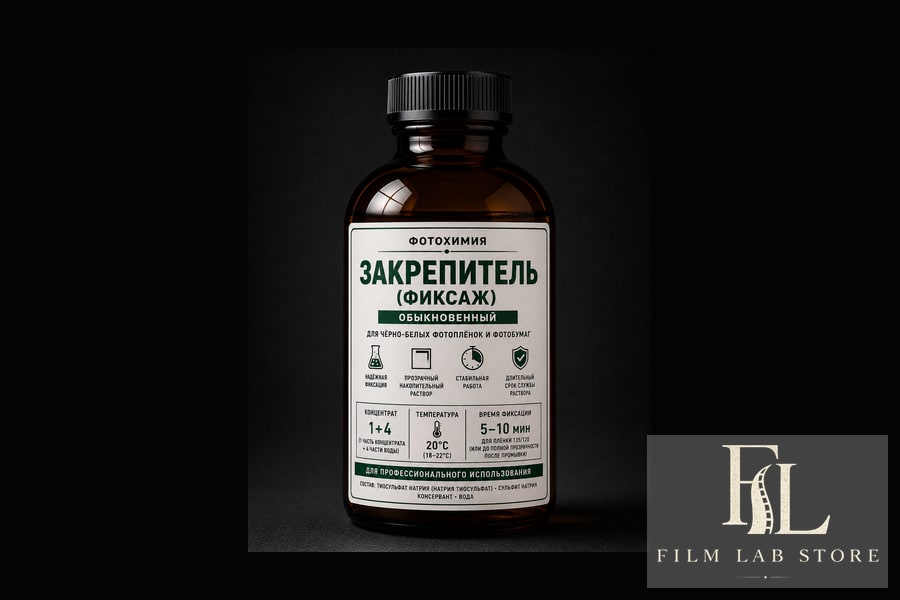
Standard Fixer
A simple, neutral sodium thiosulfate fixer for gentle processing of any black-and-white materials.
About Fixage
Ordinary (neutral) fixer is a very common and inexpensive type of fixer. It is used to fix all types of photographic materials: film, plates, and paper. It is pH-neutral and gentle on photographic materials, so it is recommended for use with older materials whose emulsion may be damaged by an acidic fixer due to expired shelf life. It is sold as a mixture in a plastic bag, which is dissolved in distilled water before use.
Character
Neutral type. The cheapest and most common type of fixer; it is gentle on the emulsion—it does not acidify or tan it.
How to Prepare and Use
- 1Use at an operating temperature of 20 °C.
- 2Follow the standard processing time indicated on the photo film package.
Recipe for 1 liter
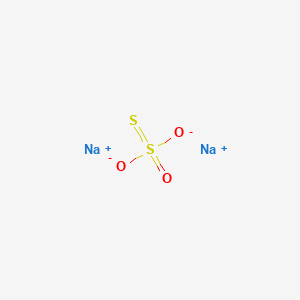
250 g
Crystalline sodium thiosulfate
1 liter
Distilled water
Chemical structures: PubChem (public domain)
Mixing it at home
A simple neutral fixer based on sodium thiosulfate.
- 1Dissolve the contents of the package (250 g of crystalline sodium thiosulfate) in distilled water.
- 2Bring the volume of the solution to 1 liter.
Key points
- The neutral type is the cheapest and gentlest on the emulsion — it does not acidify the layer, but keeps less well than an acid fixer.