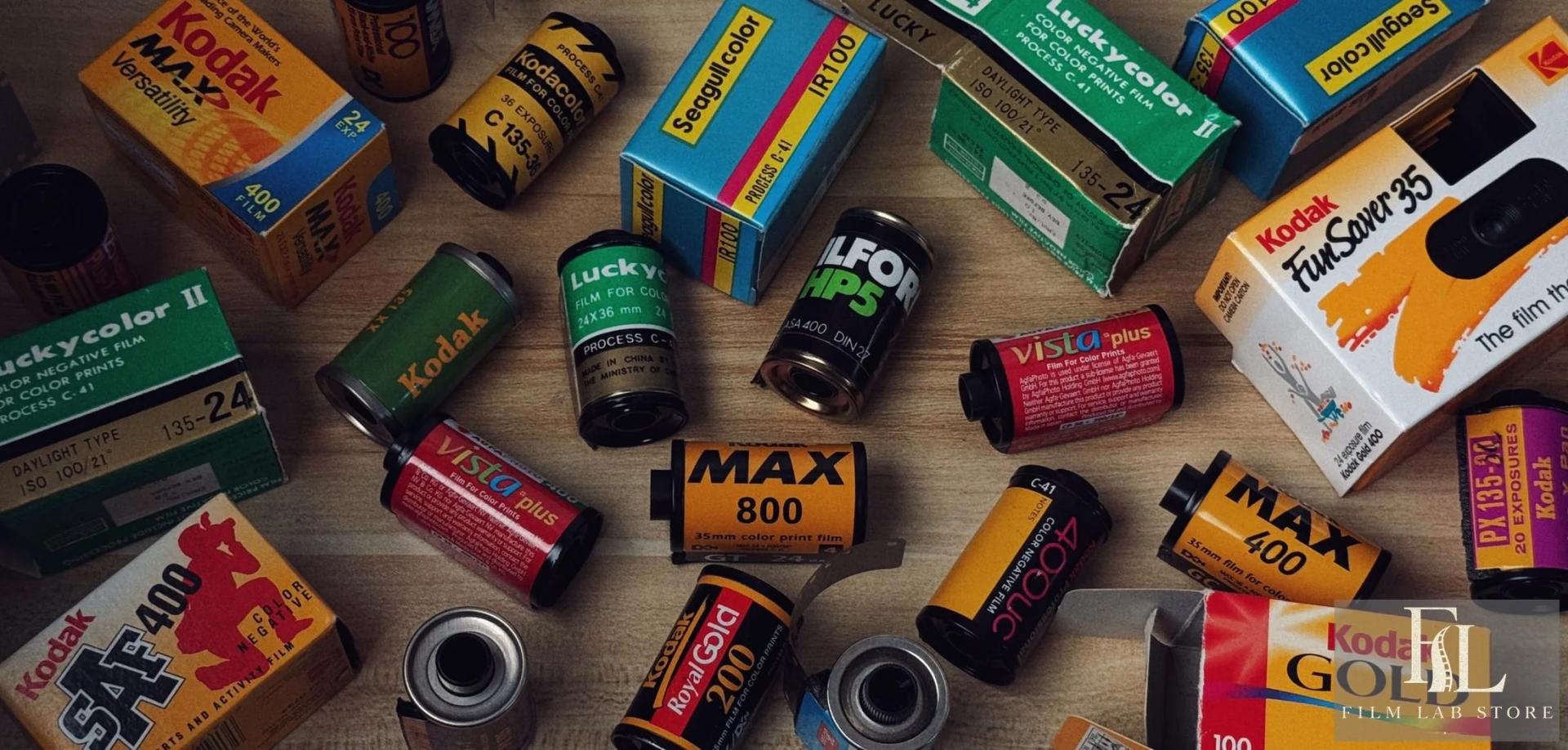
Expired film is not automatically ruined. Sometimes it produces beautiful results: soft colors, lower contrast, visible grain, unusual color shifts and a unique analog character that is difficult to imitate digitally.
Expired film is always a risk. The result depends not only on the date printed on the box, but also on storage conditions, ISO speed, film type and whether the film has already been exposed.
This article will help you understand when expired film is still usable, how to expose it correctly and what to expect after development.
In brief
- Expired film ≠ ruined film
- Add +1 stop of light for every 10 years past the expiry date (rate the film at half its nominal ISO)
- Low ISO (100–200) ages better than high ISO (400+)
- Storage conditions matter more than expiry date: a fridge extends film life significantly
- For important shots — use fresh film
What does "expired film" mean?
The expiration date does not mean the film becomes unusable immediately after that day. It simply indicates the period during which the manufacturer expects stable performance under proper storage conditions.
Over time, film may:
- lose real sensitivity
- show more grain
- lose contrast
- produce color shifts
- develop base fog
- become less predictable
Heat, humidity and poor storage are often more damaging than age itself. Film should be allowed to warm up slowly in a sealed package after refrigeration or freezing to avoid condensation on the emulsion.
Can you shoot expired film?
Yes, you can. The chances are better if the film:
- was stored in a fridge or freezer
- has not been exposed yet
- is only a few years expired
- has low or medium ISO
- is black-and-white negative film
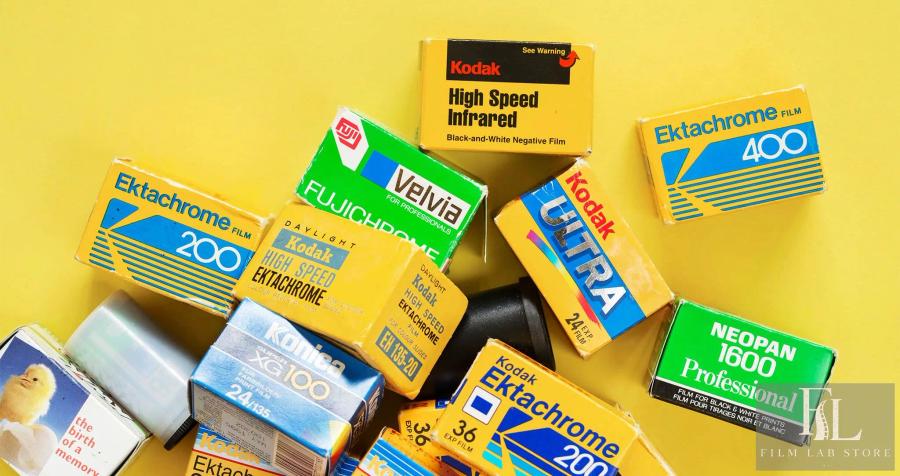
Low-speed films such as ISO 25, 50, 100 and 125 usually age better than ISO 400, 800 or 1600 films. Black-and-white film often handles aging better than color film. Slide film is the most risky because it has very narrow exposure latitude.
How to expose expired film
Expired film often needs more light because it gradually loses sensitivity. A common starting point is to add about one stop of exposure for every decade past expiration.
| Box speed | Age expired | Approximate shooting ISO |
|---|---|---|
| ISO 400 | 10 years | ISO 200 |
| ISO 400 | 20 years | ISO 100 |
| ISO 200 | 10 years | ISO 100 |
| ISO 100 | 20 years | ISO 25 |
This is not a strict rule, only a starting point. Different emulsions age differently. Expired negative film usually benefits from more light, not less.
Underexposure is often more damaging than overexposure for old film. If the film does not get enough light, shadows may lose detail, grain will be more pronounced and scanning will be more difficult.
How to expose expired color negative film
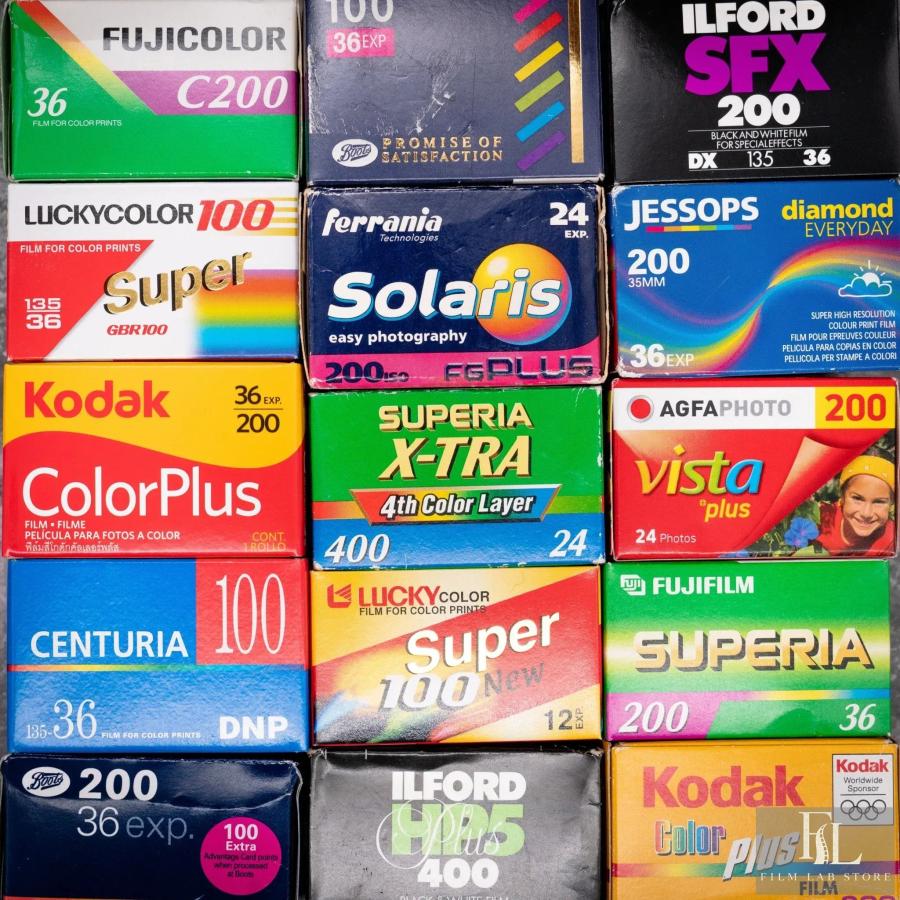
Color negative film is the most popular choice for expired film experiments. It may be Kodak Gold, Kodak ColorPlus, Fujifilm Superia, Agfa, Konica, old Svema, ORWO or another film stock.
| Film condition | Recommendation |
|---|---|
| 1–3 years expired, stored well | Box speed or +0.5 stop |
| 5–10 years expired | About +1 stop |
| 10–20 years expired | +1 to +2 stops |
| 20+ years, unknown storage | Often +2 to +3 stops, no guarantee |
| Stored in heat | Expect stronger degradation |
For example, if you have Kodak Gold 200 that expired 10–12 years ago, a good starting point may be ISO 100 or ISO 80. If it was stored in a hot place, ISO 50 might be worth trying, but the result is still not guaranteed.
How to expose expired black-and-white film
Black-and-white film is often more forgiving, especially if it is low ISO and was stored properly.
| Film speed | How to shoot with moderate expiration |
|---|---|
| ISO 25–50 | Often close to box speed |
| ISO 100–125 | Box speed or +0.5 to +1 stop |
| ISO 400 | Often +1 stop |
| ISO 800+ | Be careful, strong fog is possible |
Developer choice also matters for black-and-white film. If the film is very old, do not expect a perfectly clean image. Ilford HP5, FP4, Delta, Foma, Svema, ORWO and Forte may all behave differently.
What if the film was already exposed years ago?
This is a different case. If the film was already shot and then stored for 10, 20 or 30 years, the latent image may have degraded over time.
In this case, the goal is not technical perfection. The goal is to recover whatever image is still there.
If you find an old camera with film inside:
- Do not open the camera back.
- Do not force the rewind mechanism.
- Keep it away from heat and direct sunlight.
- Tell the lab that the film is old.
- Be ready for partial or damaged results.
If you are not planning to shoot a new expired roll, but you found old exposed film inside a camera or drawer, start with this separate guide: "Found Old Film — What Should You Do?".
How storage affects the result
Two identical rolls with the same expiration date can produce completely different results. A film roll that spent 15 years in a fridge may still look surprisingly good. A roll that spent 3 years in a hot car or near a window may be almost unusable.
Good storage
- fridge
- freezer for long-term storage
- dry place
- sealed packaging
- protection from light and temperature swings
Bad storage
- heat and humidity
- windowsill or near windows
- car
- bathroom
- opened packaging
- repeated freeze-thaw cycles
After freezing, always allow film to warm up slowly in its sealed packaging before opening — this prevents condensation on the emulsion.
Common defects in expired film
Expired film may show:
- color shifts (yellow, green, red or magenta)
- lower contrast
- increased grain
- fog
- spots and streaks
- weak image density or uneven frames
- partially blank images
For creative work, these defects can become part of the aesthetic. Expired film is unpredictable, and that unpredictability can be the reason to use it.
When not to use expired film
Avoid using old unknown film for:
- weddings or important events
- paid commercial shoots
- important portrait sessions
- testing a new camera
- once-in-a-lifetime moments
- low-light work where exposure is already difficult
If you have several rolls from the same batch, shoot and develop one test roll first before committing to the rest.
Practical checklist for shooting expired film
Before shooting
- check the expiration date
- estimate storage conditions
- check the box speed
- decide how much to lower the shooting ISO
- avoid using old film for critical frames
- shoot in good light whenever possible
- bracket exposure if you can
During shooting
- give more light rather than less
- avoid strong underexposure
- be careful with high-contrast scenes
- write down how you exposed the film
- bracket if your camera allows it
After shooting
- do not wait too long before development
- tell the lab that the film is expired
- discuss rare or very old film in advance
- do not expect digital cleanliness
- treat the result as an experiment
Should the development process be changed?
For regular C-41 color negative film, standard processing is usually fine. The issue is not that the film needs a special process, but that the emulsion itself has already changed.
Black-and-white film allows more flexibility: different developers, adjusted time, stand development or compensating development. But there is no universal recipe. The film type, age, ISO and storage history all matter.
Development cannot fully restore a damaged emulsion. It can help extract the image carefully, but it cannot undo years of storage.
Why scanning is especially important
Expired film often needs more careful scanning. An automatic scanner may misread the color mask, fog or low contrast. Sometimes the result improves significantly after manual correction of:
- white balance
- density
- contrast and shadows
- color shift
- dust and small defects
Development is only half of the process. The other half is careful scanning and digital correction.
FilmLabStore approach
At FilmLabStore, I treat old film honestly: I cannot promise perfect results, but many rolls are worth trying. This is especially true if the film may contain personal memories or if you want a creative vintage look.
I love analog photography because it is not always perfectly predictable. Sometimes old film gives a result that is not technically perfect, but very alive. Grain, softness, strange color and a sense of time can all become part of the image.
If you have expired or old film, I can help you evaluate it, choose an exposure strategy, develop it and scan the results.
Got old or expired film? Get in touch — I can help you decide whether it's worth shooting, developing, or scanning.
Film development & scanning · Film catalogue
Conclusion
Expired photographic film is not always ruined. You can use it, but it is important to understand the risks. The older the film, the higher the ISO and the worse the storage conditions, the less predictable the result will be.
The basic rule is simple: old negative film usually needs more light. But there is no universal formula. It is better to test, write down your settings and treat expired film as a creative material rather than a guaranteed way to get perfect images.
If the film is important, especially if it was already exposed many years ago, do not experiment blindly. Develop and scan it carefully, understanding that it may contain images that cannot be recreated.
Frequently asked questions
Can I shoot film that expired 20–30 years ago?
Yes, but results are unpredictable. Low-ISO films (50–100) stored in a fridge often produce usable results even after 20–30 years. High-speed films (ISO 400+) of the same age fare much worse. Rate the film at 1/4 to 1/8 of nominal ISO and treat the shoot as an experiment.
Should I tell the lab that the film is expired?
Absolutely, especially if it's more than 10–15 years old. The lab can adjust scanning: manually dial in exposure, white balance, and colour correction. This significantly improves the chance of recovering usable frames.
What if the film was stored in a warm place or without packaging?
Lower your expectations. Heat and humidity degrade the emulsion faster than age alone. You can try shooting with heavy overexposure (+2–3 stops), but there are no guarantees. If the film is precious, run a test roll first.
Should I develop expired film at home?
If you have darkroom experience — go for it. For colour C-41 stick to standard process: push processing won't help and mistakes are easy to make. Black-and-white allows more experimentation with development time. Without experience, a lab is the safer choice.
What will the results look like?
It depends on the film and how old it is. Common characteristics: warm or greenish colour shift, increased grain, reduced contrast, sometimes spots or base fog. With careful exposure and good scanning this can look like a beautiful vintage aesthetic — which is exactly why many people seek out expired film.