Found Old Film: What to Do and Can You Develop It?
Probably, everyone who is fond of photography has at least once found old photographic film among family things. In a desk drawer, on the mezzanine, in a box of photo albums or even in the attic.
The first thought is usually one:
Is it still possible to shoot with it?
The good news is that in many cases, yes. Even if the film is 20, 30 or more years old. But before you load it into your camera, it's worth doing a few simple checks.
Briefly
- Don't throw away old film: even after decades, you may still have footage on it.
- If the film was in the camera, consider it shot and do not open the camera in the light.
- If the film has not been shot, you can try shooting with exposure compensation on it.
- Black and white film tends to age more slowly, color negative film more quickly, and slide film is the most finicky.
- It is best to store found footage in a cool dry place and develop it as soon as possible.
First, determine whether the film is new or has already been shot.
If the film is in the factory box or cassette with the tail sticking out, you may still be able to shoot on it.
If the film was inside your old camera, rewound back into the cassette or you're not sure if you shot on it or not, it's best to consider it shot and don't open the cassette in the light.
The main rule is simple: do not open the film, do not rewind it unnecessarily and give it to the developer as soon as possible.
What not to do with old found film
- Do not open the tape or camera in the light.
- Do not pull the film out of the cassette unless you are sure it is uncut.
- Don't try to "see the frames" before developing - you can't see the image on undeveloped film.
- Do not dry the film on a radiator or place it in the sun.
- Don't send valuable old film to a random lab without discussing the process.
Step 1: Don't be in a hurry to throw away the film
Even if the expiration date expired years ago, it does not mean that the film has become unusable.
In the world of analog photography, there is a whole trend of shooting on expired materials. Many photographers deliberately seek out old film because of its unpredictable character, unusual grain and atmospheric look to the shots.
This is especially true for:
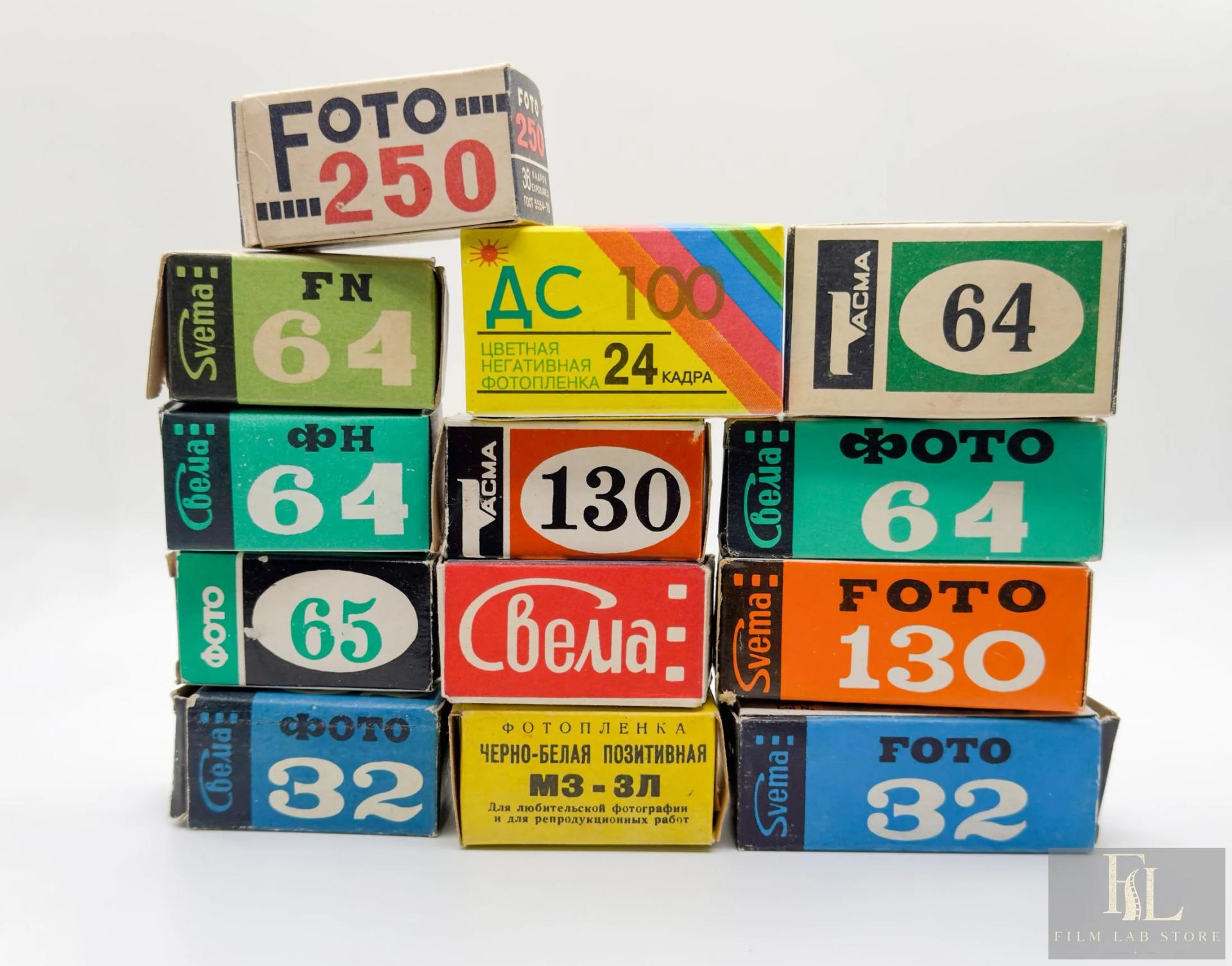
- Sveema, ORWO, Kodak, Agfa, Fujifilm, Ilford
Even very old film can produce interesting results.
I wrote about the peculiarities of shooting on expired film in detail in the articleExpired photographic film: can you take pictures.
Step 2: Try to determine what kind of film it is
The best scenario is when the box or factory packaging is still intact.
Note to self:
- manufacturer's name;
- film type;
- significanceISO (ASA or GOST);
- expiration date.
If there is no packaging, inspect the cassette itself. On many films, you will find the manufacturer's or emulsion type designation.
If you are unable to identify the film yourself, you can turn to thematic communities or send the photo to the laboratory specialists.
Step 3. Remember where it was stored
For old film, storage conditions are often more important than its age.
Film that has been in the refrigerator for 30 years may be in much better condition than film that has been sitting on a windowsill in the sun for 10 years.
Best Terms:
- refrigerator, freezer, cool dry room.
Worst:
- attic in summer, car, balcony, places with high humidity.
Unfortunately, I often don't know the storage history of the film. But that's no reason to give up the experiment.
Read more about storage conditions in the articleHow to store photographic film at home.
Step 4. Can I shoot on old film?
In most cases, yes, if the film has not been shot before and physically looks intact.
For black and white film, time works much more gently. That's why old Svema or ORWO rolls often give quite usable results even after decades.
Color negative films age faster, and color slides age even faster. They may exhibit severe color shifts, loss of contrast, or loss of sensitivity.
But even this is not always a disadvantage. Many photographers intentionally use such effects as an artistic device.
How to expose old film
A rule of thumb often used for old negative film is to add about +1 stop of exposure for every 10 years of expiration. But this is not an exact formula, only a starting point.
- ISO 400 with an expiration of 10-15 years can be tried to shoot like ISO 200 or ISO 100.
- ISO 100 with an expiration of 20-30 years can be tried to shoot like ISO 25-50.
- For very old film, it is better to make a test roll if the material is not unique.
For E-6 slide film, this rule works worse: the slide will not tolerate exposure errors well and will suffer more from aging. Refer to the laboratory's recommendations.
Step 5: Don't know the ISO? Don't panic
One of the most common problems is the lack of information about film sensitivity.
If the box is lost, determine the exactISO can be difficult.
In that case, you can:
- to find information on the name of the film;
- to do a test shoot;
- use the recommendations for old emulsions.
I cover this in detail in a separate article:
How to determineISO of the old tape?
Step 6: If the film is without a cassette
Quite often one finds not a finished cassette, but a roll of film in the factory packaging.
In such a case, it must be rewound into a 35mm cassette for shooting.
This can be done on your own or entrusted to a laboratory.
Detailed instructions can be found here:
How do you load old film into a cassette tape?
If the film has already been shot
If you find an old camera with film inside or a cassette with no box, it's best to assume it already has footage on it.
In that case:
- Do not open the back cover of the camera in the light;
- If the film is still in the camera, carefully rewind it according to your camera's instructions;
- If you're not sure how to do it, it's better not to risk it and ask for help;
- store the cassette in a cool, dry place;
- develop the film as soon as possible.
Even if the film is many years old, there is still a chance to get images.
What Results to Expect from Old Film
Old film rarely behaves predictably.
Possible:
- increased grain, loss of contrast, base veil (this is a uniform light lightening of the whole negative, which occurs by itself without the influence of light), loss of sensitivity, strange color shades.
But it's this unpredictability that often makes old film interesting.
Each roll becomes a little experiment.
A real story from my practice
During my time working with film, I've seen all sorts of cases, but one story in particular stands out in my memory.
A man in his fifties once wrote to me. While cleaning his house, he found an old camera that had been in the closet for years. The most interesting thing was inside - the camera still had Kodak Color film in it.
No one knew how many years it had been there. The only thing that was clear was that the film had been exposed a long time ago, long before digital photography had completely replaced film photography.
He asked a simple question:
- Is there any chance of developing this film?
I honestly replied that there was a chance, but no guarantees could be given. Film is a rather capricious material. After shooting, it is desirable to store it in a cool and dry place. The higher the temperature and humidity, the faster the image degrades. And in my case, I didn't even know where and how it had been stored all these years.
But I decided to give it a try.
When I took the film out of the tank after developing and saw the first developed images, I confess I was really excited. There really were images on the negative. Not blank frames, not blurred silhouettes, but real photographs.
I carefully scanned the film and sent the result to the owner.
And that's when the fun part started.
The footage showed fragments of his life that he had almost forgotten. Family walks, close people, moments from the past when everyone was younger. Photos that could have disappeared forever simply because one day someone forgot to develop the film.
His joy seemed to be immense. But to be honest, I was just as happy.
In that moment, I was once again convinced that old film is not just photographic material. Sometimes it's a time capsule.
This is why I never advise throwing away found footage, even if it is decades old. As long as the negativity exists physically, there is still a chance to get the memories back.
Sometimes one old roll can bring back moments that were thought to be lost forever.
Found some old film and don't know what to do with it?
You can send a photo of the cassette, box or camera to Telegram - I can help you determine the type of film and tell you if it makes sense to try developing.
FilmLabStore does:
- develop and scan old film
- gently assist in removing film from an old camera.
- Identify the film type from the cassette or packaging
- select film for a new shoot
Write on Telegram · Developing & Scanning · Browse Film
The main conclusion
If you find old film, don't be in a hurry to throw it away.
Even if it's older than you are, there may still be shots in it that can never be replicated on modern materials.
Check its condition, try to identify the type of film, carefully peel off a test roll and look at the result.
Sometimes it's these random finds that bring out the most interesting photos.
Frequently Asked Questions
Is it possible to develop film that is 20-30 years old?
Yes, there's a chance. But the result depends on the type of film, storage conditions and whether it was shot. It is impossible to guarantee the result: old film may have veiling, strong grain, low contrast or color shifts.
What should I do if I found film in an old camera?
Do not open the back cover of the camera in the light. If you are not sure whether the film is rewound, it is best not to take any chances. You can get help to carefully rewind or remove the film without exposing it to light.
Is it possible to see the footage on the film before developing?
No. No image is visible on unexposed film. If you open the film in the light, all or part of the image may be destroyed.
Can I shoot with expired film?
Yes, if it has not been shot before. Usually more light is given for older negative film, but the exact correction depends on age, ISO, film type, and storage conditions.
Where to store found old film before developing?
In a cool, dry place, preferably in a closed bag or container. Do not place film in the sun, on a radiator, in a car or in places with high humidity. If the film is valuable, it is best to develop it as soon as possible.
Related articles
Expired film: can you shoot with it and how to get results
How to identify the ISO of old film — article coming soon.
How to shoot with expired film — article coming soon.