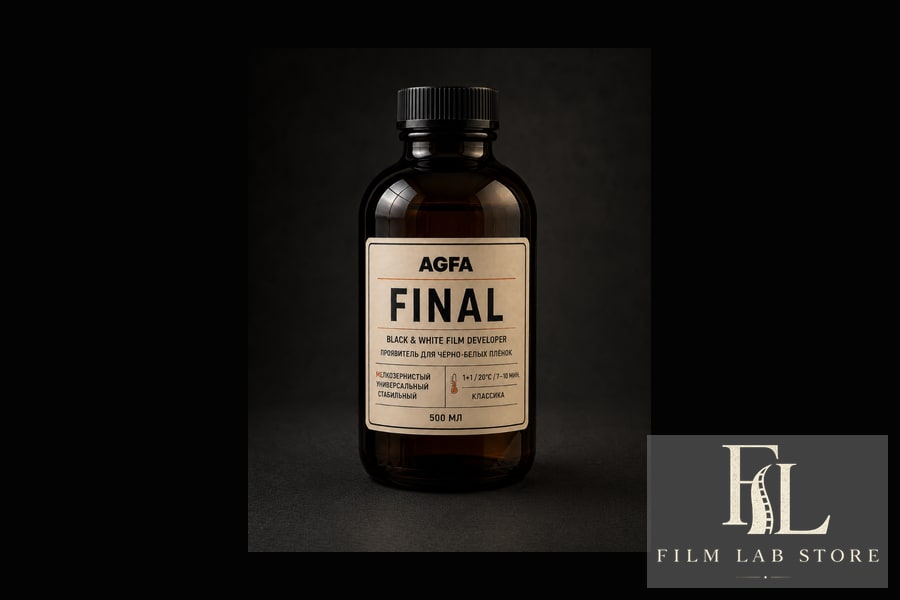
Agfa Final
A universal fine-grain developer based on a boron-citrate buffer—a “timeless classic” for film and cinema with a history spanning nearly 80 years.
About the Developer
Agfa Final is a versatile, fine-grain, broad-spectrum developer for film and photographic materials that has been in production for over 75 years and has a huge following. Along with D-76 and Rodinal, it is considered a timeless classic that never goes out of style. Compared to D-76, it produces a wider range of negative densities within the same tonal range—some people like this, others don’t; it’s a matter of taste. The developer is extremely stable and retains its properties well even when partially used — largely thanks to the boron-citrate buffer composed of sodium tetraborate and trisubstituted sodium citrate, which provide the solution with a high buffer capacity.
Character
A versatile, fine-grain, general-purpose developer for motion picture and photographic film. It operates very cleanly, has a leveling effect, and is self-cleaning: oxidation products, along with gelatin impurities, precipitate as a coarse, flaky sediment that is easily separated from the solution.
Best films
General-purpose medium- and low-ISO films—Ilford FP4+/HP5+, Kodak Tri-X/T-Max, Fomapan 100/200/400, ORWO/Svema, motion picture negative—anywhere a universal developer is needed as a replacement for D-76.
Pros
- A wider range of negative densities than that of D-76, for the same gamma
- Excellent stability of the solution thanks to the boron-citrate buffer
- Self-cleaning—oxidation byproducts settle as flakes rather than as a cloud of sediment
Cons
- Not everyone prefers the wider tonal range compared to the D-76
- There are no ready-made time charts for specific modern films—only the times listed on the box
- Requires the two packets to be dissolved in the exact order
Recipe for 1 liter
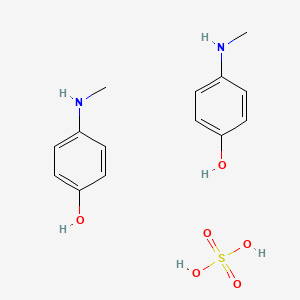
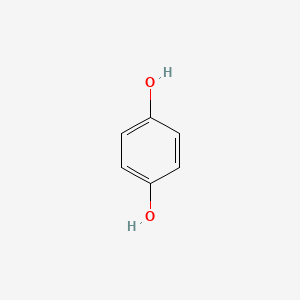
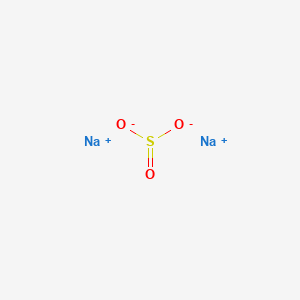
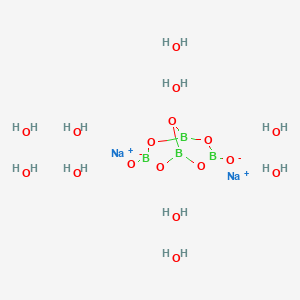
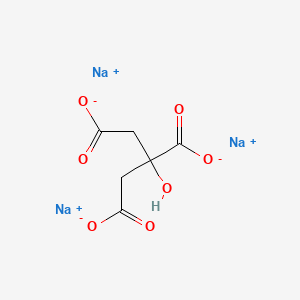
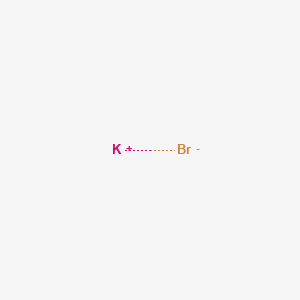
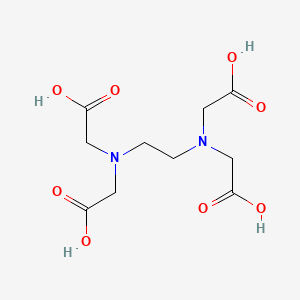
Chemical structures: PubChem (public domain)
Mixing it at home
The developer is classically supplied in two packets — buffer salts and developing agents; the order of dissolving matters.
- 1The developer is packaged in two bags: one contains the developing agents (metol and hydroquinone), and the other contains all the other components.
- 2Dissolve about half the contents of the large packet in approximately 750 ml of warm water.
- 3Once dissolved, add the entire contents of the small packet and wait until it is completely dissolved.
- 4Add the rest of the large package to the solution and stir until it is completely dissolved.
- 5Let the solution cool to room temperature, bring the volume to 1.0 liter, and filter it.
Key points
- It works very cleanly and has a levelling action: the borate–citrate buffer keeps activity stable, so the solution tolerates partial exhaustion well.
- One liter of developer is sufficient to process up to 10 rolls of 35mm film; use the standard processing time indicated on the film package for the first roll, and develop each subsequent roll for 1 minute longer.