UP-2 Universal Developer
An energetic metol-hydroquinone developer of the Soviet school: high contrast and dense highlights on film, photographic paper and technical materials.
About the Developer
The UP family of metol developers traces back to the ORWO-1 (108) formula — UP-2 is the Soviet modification of a time-proven recipe from the East German firm ORWO. The name is plain enough: «universal developer». It earned the word because it handles the widest range of photographic papers just as confidently as it handles film. It began as a purely technical developer, used on aerial films, microfilm and X-ray materials, where contrast and density matter more than delicate gradation. UP-2 later settled in as the standard and sensitometric developer for a broad range of materials — control samples were processed in it so that different films could be compared on equal terms. In the USSR it was sold as a dry mix for one litre of working solution and was one of the cheapest formulas on the shop shelf.
Character
Energetic and contrasty. Unlike fine-grain formulas, UP-2 holds about ten times less sulphite and five to six times more soda: hence the fast action, the high maximum densities and the pronounced contrast. It does not cut the material's true film speed, and it renders midtones better than you would expect from a developer of this class. The grain is coarser than D-76 or Microphen — that is the price of the energy.
Best films
Technical materials: X-ray, astrophotographic and aerial films, microfilm. Among ordinary stocks — low- and medium-speed black-and-white films whenever contrast is wanted. It works equally well on photographic paper and plates.
How to Prepare and Use
- 1Dissolve the reagents in water at 30–50 °C in the order given below, then cool the solution to the working temperature of 20 °C.
- 2Develop film for 2–5 minutes (low-speed materials) or 5–10 minutes (high-speed) at 20 °C.
- 3Develop paper for 1–2 minutes in the undiluted solution; for a softer result dilute 1:1 with water and develop for 1–4 minutes.
- 4One litre of working solution covers roughly 8 rolls of 135/36 film or 2 m² of photographic paper.
Pros
- High contrast and dense maximums — rescues flat, low-contrast subjects
- Does not cut the material's true film speed
- Genuinely universal: works alike on film, paper and plates
- All five reagents are cheap and easy to find
Cons
- Coarser grain than fine-grain developers such as D-76 or Perceptol
- Its energetic character is unforgiving of overdevelopment
- A poor choice for high-brightness-range subjects — the highlights block up
- The mixed solution crystallises quickly in the cold
Recipe for 1 liter
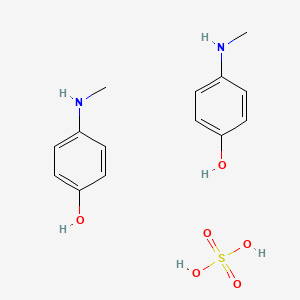
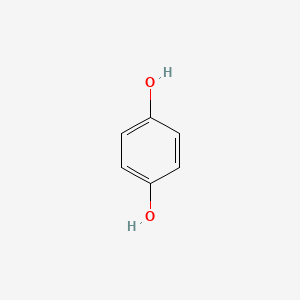
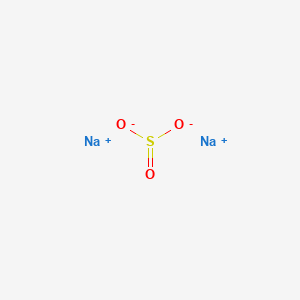
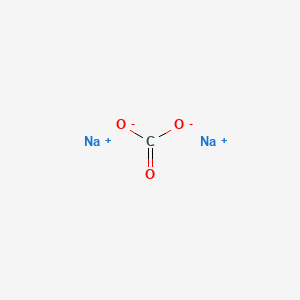
Chemical structures: PubChem (public domain)
Buy the ready-made kit
Reagents to make 1 litre of working solution
€1.9
Mixing it at home
The classic five-part formula: metol and hydroquinone work as a pair, soda supplies the alkalinity, potassium bromide holds back fog. Packed as five separate sachets, one per reagent.
- 1Take a vessel marked at 1 litre and pour in 700–750 ml of water heated to 30–50 °C.
- 2Dissolve the metol (5 g). Do it first and do it completely — metol dissolves noticeably worse once the sulphite is already in the water.
- 3Add the sodium sulphite (40 g) and dissolve it fully — it protects the developing agents from oxidation.
- 4Dissolve the hydroquinone (6 g).
- 5Stir in the anhydrous soda (31 g) and let it dissolve completely — this is what makes the solution alkaline and active.
- 6Dissolve the potassium bromide (4 g) last.
- 7Rinse the sachets with warm water and pour the rinsings into the solution so none of the weighed dose is lost.
- 8Cool the solution to 20 °C, top up with water to the 1-litre mark and stir. Filter if needed.
Key points
- The order matters: metol goes in before the sulphite, soda after the developing agents. Get it wrong and part of the chemistry stays on the bottom.
- This is an energetic developer: one extra minute lifts contrast noticeably. Start at the lower end of the time range and adjust from the result.
- UP-2 is among the solutions most likely to crystallise in the cold — in winter ship and store it dry, and mix the working solution where you use it.
- For technical stock (aerial, X-ray) find the time by test strip: such materials vary in contrast far more widely than ordinary negative film.
Recipe variants
UP-2M — the version with EDTA
The modern version of the formula, the one UP-2M is sold as today. It differs from classic UP-2 by the addition of EDTA, which binds hardness salts so the solution stays clear and throws no precipitate on tap water. Just as energetic, but it keeps better.
| Metol | 5 g |
| Hydroquinone | 6 g |
| Sodium sulfite (anhydrous) | 40 g |
| Sodium carbonate, anhydrous | 31 g |
| Potassium bromide | 4 g |
| Trilon B | 2 g |
| Water | to 1 L |
How to use: Mixed and used exactly like classic UP-2. Dissolve the EDTA first, ahead of the metol, so it takes the water's hardness out straight away.
- Commercially UP-2M comes in two sachets rather than five: the developing agents in one, everything else in the other.
- If your tap water is hard and classic UP-2 goes cloudy or throws a precipitate, switch to this version or mix on distilled water.