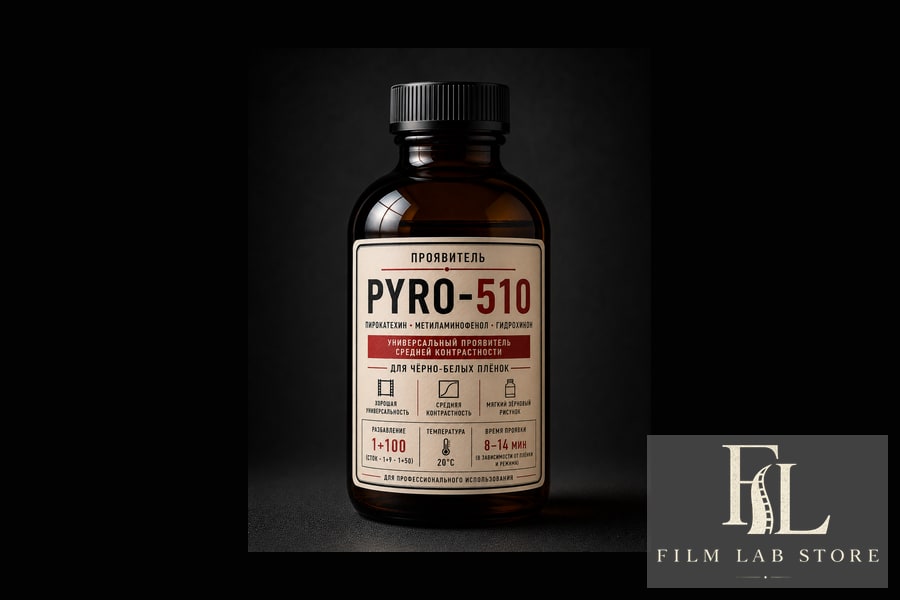
Pyro-510
Single-solution pyrogallic concentrate—offers a unique colored finish and the flexibility to dilute it up to a ratio of 1:500.
Safety
Pyrogallol is toxic and irritates the skin, the eyes, and the respiratory tract, and is particularly dangerous if dust is inhaled—weigh the powder while wearing a respirator with an organic dust filter, work with nitrile gloves and safety goggles, and in a well-ventilated area. Triethanolamine also irritates the skin and mucous membranes upon contact with a hot solution (the concentrate is heated to 60–65°C)—exercise caution during preparation. Do not pour used developer down the drain without diluting it with a large amount of water—dispose of it as chemical waste in accordance with local regulations. Store the concentrate in a tightly sealed, labeled container out of the reach of children.
About this developer
Pyro-510 is a single-solution, highly concentrated dye developer for photographic film that has recently become very popular among enthusiasts of pyro developers. Pyrogallol is used here as the main developing agent in combination with phenidone—unlike Pyrocat HD, which uses a combination of pyrocatechol and phenidone. The image produced by this developer is unique and interesting. The developer is prepared from a concentrate by diluting it with water in a 1:100 ratio. The concentrate has a long shelf life (about a year or more), but the prepared working solution does not keep well, so it is prepared immediately before development.
Character
Pyrogallic (pyro) staining developer.
How to Prepare and Use
- 1The working solution is prepared immediately before development by diluting the concentrate with water in a ratio of 1 part developer to 100 parts water (1+100).
- 2Develop the film for 5–7 minutes at 20°C; you can extend the development time.
- 3To enhance edge effects, the developer can be diluted to a ratio of 1:500 with a longer processing time and gentle agitation: continuous agitation for the first minute, followed by one full rotation of the tank spiral every 10–15 minutes; the total development time is 60 minutes.
Development times for different films
| Film | Breeding | Time @ 20°C |
|---|---|---|
| Kodak Tri-X 400 (400 units) | 1+100 | 8 min |
| Ilford HP5+ (400 units) | 1+100 | 8¼–9 min |
| Ilford FP4+ (125 sheets) | 1+100 | 10 min |
| Kodak T-Max 400 (400 sheets) | 1+100 | 9 min |
The times are starting points from an independent 510-Pyro development chart (Massive Dev Chart / Bostick & Sullivan, 1+100 dilution, 20°C), not from the recipe’s original source. The recipe author provides only a general guideline of 5–7 minutes at 20°C—use this as a reference and adjust according to your agitation method.
Pros
- Single-solution—no need to mix two separate solutions before use
- A unique, interesting, and colorful image
- The concentrate has a shelf life of about one year
- Flexible distribution up to 1+500 to enhance edge effects
Cons
- Toxic — pyrogallol is poisonous; gloves, ventilation, and careful disposal are required
- The prepared working solution does not last long—prepare it immediately before developing.
- To prepare the concentrate, triethanolamine must be heated to 60–65°C
Concentrate per 100 ml
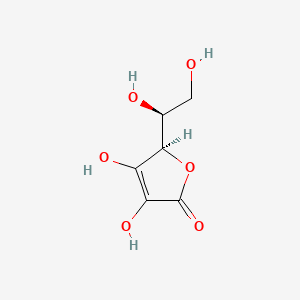
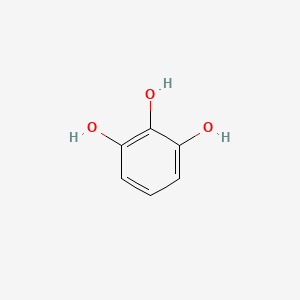
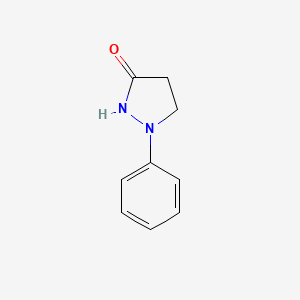
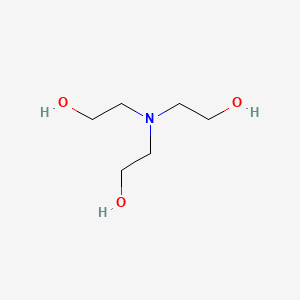
Chemical structures: PubChem (public domain)
Mixing it at home
A pyrogallol staining concentrate on triethanolamine; diluted right before use.
- 1Prepare the concentrate by dissolving the substances in the following order in 75 mL of hot (60–65°C) triethanolamine: first ascorbic acid (5 g), then pyrogallol (10 g), then phenidone (0.25 g).
- 2Once it has completely dissolved, add triethanolamine to bring the volume to 100 mL.
Key points
- Pyrogallol is toxic. The developer gives a stained image and can be diluted up to 1:500 with longer development.